
Thinking About Becoming an IoT Engineer in Canada? Here's What You Need to Know
So you're curious about what it takes to break into IoT engineering in Canada in 2026? It's a fair question—especially with smart city projects rolling out in Toronto, industrial automation picking up in Alberta, and connected healthcare expanding in Vancouver. But here's the catch: the skills that got people hired back in 2020 aren't cutting it anymore. Canadian employers have become more selective, and they're looking for a distinct combination of embedded expertise, cloud fluency, and security instincts.
In this guide, I'll walk you through the core skills, the ones that give you a real advantage, and the missteps that could cost you an offer. Whether you're fresh out of school or an experienced engineer switching lanes, this advice comes straight from real job postings and conversations with hiring managers across the country.
Core Technical Skills: The Non-Negotiables
Embedded Systems Programming (C and C++)
Let's be blunt: if you don't know C and C++ inside out, you're not getting past the first interview. Most IoT devices run on microcontrollers with tight memory and processing limits—that's where C excels. You'll need to handle interrupts, manage memory manually, and write code that runs reliably 24/7. C++ is becoming increasingly important for more complex devices, especially those running real-time operating systems (RTOS) like FreeRTOS or Zephyr.
Don't just list these languages on your resume—be prepared to explain how you've used them to tackle real hardware constraints. In Canadian interviews, expect questions about bit manipulation, pointer arithmetic, and debugging without a display. It's about showing you understand the low-level details, not just recalling syntax.
Communications Protocols: MQTT, CoAP, and More
IoT is fundamentally about devices talking to each other and the cloud. You need to be comfortable with MQTT—the de facto standard for lightweight messaging—and also know your way around CoAP for constrained networks. Understanding HTTP/HTTPS and WebSockets for device-to-server communication is essential too.
Canadian companies, especially in agriculture tech (think Saskatchewan's precision farming) and energy (Alberta's oil and gas monitoring), value engineers who can choose the right protocol for the situation and explain the trade-offs. They don't want someone who just knows MQTT exists—they want to see that you understand QoS levels, retained messages, and how to handle flaky connectivity. Talking about a project where you dealt with intermittent signals is a great way to stand out.
Cloud Platforms: AWS IoT, Azure IoT Hub, or Google Cloud IoT
No modern IoT solution ends at the device. You'll be sending data to the cloud, where it's stored, processed, and analyzed. AWS IoT Core is the most common in Canada, but Azure IoT Hub is strong in enterprise-heavy sectors like finance and healthcare. Aim to know at least one platform deeply. For AWS, that means understanding device shadows, IoT Core policies, and rule actions. For Azure, you should be comfortable with device twins, IoT Edge modules, and Azure IoT Central.
I've seen too many candidates claim cloud experience but freeze when asked about device authentication or what a shadow is. Be honest about your depth. Start with free tiers, build a small project, and document it. That hands-on experience counts more than a certificate with no practical application.
Sensors and Actuators: Know Your Hardware
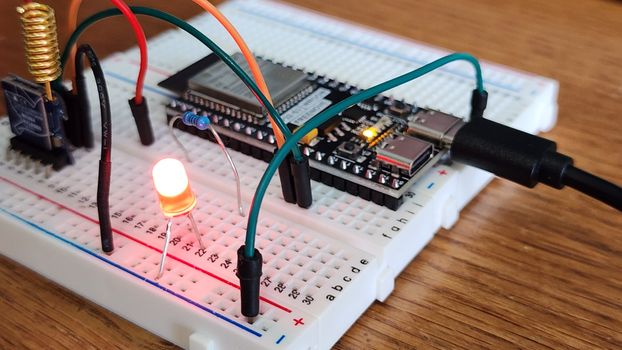
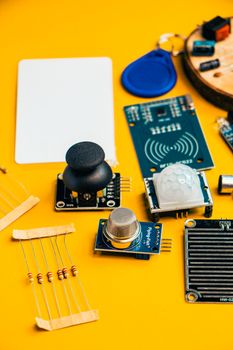
You'll be integrating temperature sensors, accelerometers, GPS modules, relays, and more. You don't need to be an electrical engineer, but you must understand how to interface with sensors via I2C, SPI, or UART. You should be able to read a datasheet, understand pinouts, and wire up a prototype on a breadboard without causing a short circuit.
In my experience, Canadian companies love to test this in interviews. They might hand you a simple sensor and ask how you'd connect it to a Raspberry Pi or an ESP32. If you can't sketch it out or explain the wiring, that's a red flag. Practice with common sensors at home—it'll pay off.
Security Skills: The Fastest Way to Stand Out
Secure Boot, Encryption, and Device Authentication
IoT security is a massive concern, and Canada has been tightening privacy regulations. Sending data over plain HTTP is no longer acceptable. You need to understand how to implement TLS, use certificates for device authentication, and store secrets securely on the device. Concepts like secure boot and signed firmware updates are becoming table stakes.
Hiring managers are looking for engineers who can think like an attacker. If you've ever participated in an IoT-focused hackathon or CTF, mention it. A security mindset is your best asset—it shows you're thinking beyond just making things work.
Cloud Security: IAM Roles and Policies
On the cloud side, you must know how to set up least-privilege IAM roles for devices and services. Many data breaches happen because of misconfigured cloud buckets or overly permissive policies. Show that you can design a secure device-to-cloud pipeline, including secrets management with tools like AWS Secrets Manager or Azure Key Vault.
Data Management and Analytics: Beyond Just Collecting Data
Collecting data is easy. Making it useful is another story. Canadian employers want engineers who can help extract insights from the flood of sensor data. That means knowing how to work with time-series databases like InfluxDB or TimescaleDB, and understanding basic data processing with tools like Apache Kafka or AWS Kinesis.
You don't need to be a data scientist, but you should be able to write queries, aggregate data, and maybe build a simple dashboard. A lot of job descriptions list "familiarity with Python for data analysis" as a plus. If you can use Python to pull data from a database and visualize it, you're already ahead of many applicants. It's one of those skills that quietly boosts your profile.
Programming Languages That Boost Your Profile
While C/C++ are the core, Python is a must-have for scripting, prototyping, and data work. Many IoT gateways run Linux, and Python is perfect for writing device logic or cloud functions. You'll also encounter Node.js for building device management interfaces or connecting to APIs. In Canada, there's a growing preference for full-stack IoT engineers who can code on both ends.
Keep your GitHub active with IoT projects, even if they're simple. I've reviewed hundreds of resumes, and the ones with a link to a working project always catch my attention more than ones with just a list of languages. It's immediate proof of what you can do.
Practical Insights: What Hiring Managers Really Want
Here's a piece of advice that might ruffle some feathers: many Canadian employers don't care about your certifications as much as your hands-on capability. I've interviewed candidates with a dozen certificates who couldn't explain how to debug an OTA update failure. Conversely, I've hired a self-taught developer who had a personal project that measured soil moisture in his backyard and sent alerts to his phone. That showed me problem-solving and initiative—those are things you can't teach.
Another trend I've noticed is the shift toward edge computing. Companies are realizing that sending every byte of data to the cloud is expensive and slow. They want engineers who can run lightweight machine learning models on devices or gateways. If you have any experience with TensorFlow Lite or edge AI, highlight it. That's a differentiator that can set you apart in a competitive market.
Don't underestimate soft skills, either. You'll be working with product managers, hardware suppliers, and clients. Being able to explain technical trade-offs to a non-technical audience is rare and valuable. It's often the difference between getting the job and being passed over.
Market Outlook: IoT Jobs in Canada
The IoT sector in Canada is booming. According to a 2025 report by the Information and Communications Technology Council (ICTC), the IoT workforce is expected to grow by 15% over the next five years, with over 10,000 new jobs created by 2030. The average salary for an IoT engineer in Canada is around $95,000, but that varies widely. In Toronto and Vancouver, you can expect $85k to $110k for mid-level roles, while senior positions can exceed $130k. In regions like Waterloo and Ottawa, the range is similar, but the cost of living is lower.
The gender gap in tech remains a challenge, but IoT is seeing more diverse candidates, which is a positive shift. Companies are realizing that diverse teams build better products—and they're acting on it.
Comparison: IoT Engineer vs. Embedded Systems Engineer
A common question I get is how an IoT engineer's role differs from a traditional embedded systems engineer. In short, an embedded engineer focuses on the device itself—writing firmware, optimizing power consumption, and ensuring real-time behavior. An IoT engineer does all that plus the connectivity, cloud integration, and data analytics. It's a broader skill set, but the pay can be higher because you're responsible for the end-to-end system.
If you're coming from an embedded background, you'll need to upskill in cloud services and networking. If you're coming from a web development background, expect to learn hardware interfacing and maybe some electronics basics. Both paths are viable, but the learning curve is steep—be prepared for that.
FAQ: Skills Required for IoT Engineer in Canada
Is it better to be an expert in one skill or have a broad knowledge?
In Canada, the sweet spot is a T-shaped profile. Deep expertise in one area—say, embedded firmware—paired with working knowledge of cloud, security, and data. That makes you adaptable. If you're too specialized in a niche area, you might struggle to find a role outside the big tech hubs. If you're too broad, you might appear as a jack-of-all-trades with no real depth. Aim for that balance.
What are the most common IoT job titles in Canada?
You'll see titles like IoT Solutions Engineer, IoT Firmware Developer, Embedded IoT Developer, IoT Cloud Engineer, and Solutions Architect for IoT. The responsibilities vary, but they all require a mix of hardware and software skills. Read the job description carefully because "IoT Engineer" can mean different things depending on the company. Don't assume—look at the specifics.
How long does it take to learn the necessary skills?
If you're starting from zero with no programming or electronics background, expect to spend at least 12 to 18 months of focused learning to be job-ready. If you already know programming, you can pick up hardware basics in a few months. The key is to build a portfolio of projects that showcase your skills, not just take online courses. Projects are your proof of ability.
Do I need a degree in computer science or electrical engineering?
While a degree helps, it's not mandatory. I've met IoT engineers with physics, aerospace, and even biology backgrounds who made the switch. What matters more is your practical ability and willingness to learn. That said, a degree is often a screening requirement for larger corporations, so be aware of that. If you don't have one, look for startups or mid-sized companies that focus more on skills.
Are there any specific certifications that hold weight in Canada?
Certifications from Amazon (AWS Certified IoT Specialty) or Microsoft (Azure IoT Developer) are recognized, but they're not a substitute for experience. If you have spare time, they're worth getting because they show commitment. Just don't expect a certification alone to land you a job—combine it with real projects and a strong portfolio.
Final Thoughts: Your Next Step
The skills required for IoT engineer in Canada are demanding but achievable. Focus on getting your hands dirty with real hardware and cloud platforms. Build something that solves a personal problem, document it, and share it. The Canadian market rewards practical, curious engineers who can navigate both the physical and digital worlds.
Don't wait for the perfect job posting to appear. Start building, start networking, and you'll be ahead of the curve in no time.