Why “Just Coding” Won’t Get You Hired as an IoT Engineer in Germany
Here’s something I keep hearing from engineers looking to break into the German market: “I know Python and JavaScript—I’ll be fine.” The reality? In Germany, that assumption often gets your CV tossed aside before the first interview. Employers here want a hybrid profile—someone who combines embedded systems knowledge, industrial communication protocols, and a solid grasp of data privacy laws. These aren’t skills you pick up in a weekend bootcamp. If your goal is an IoT engineering role in Germany, it’s time to drop the “full-stack developer” identity and build a skillset that actually matches what local industry needs.
Core Technical Stack: Beyond Python and Node.js
Scan German IoT job postings and you’ll see a pattern: even roles that sound software-focused list C and C++ as must-haves. The reason? Most industrial IoT projects run on resource-constrained microcontrollers where Python’s overhead just doesn’t work. A 2026 survey by Bitkom found that 72% of German industrial IoT projects rely on embedded C for firmware. Rust is gaining serious traction in automotive IoT, while Python still has a place—at the application layer for data processing and edge computing scripts.
Here’s what to really prioritize:
- C/C++ (non-negotiable for firmware and real-time systems)
- Rust (increasingly expected for safety-critical applications)
- Python (prototyping, data aggregation, ML at the edge)
- MQTT and OPC UA (the two protocols you’ll see everywhere in German factories)
- Linux Yocto / Buildroot (for custom embedded Linux builds)
Protocol knowledge is what separates juniors from seniors. Everyone knows REST APIs—but German IoT roles often demand OPC UA, MQTT Sparkplug, and CAN bus, especially in automotive. Expect interview questions that ask you to choose between MQTT and CoAP for a specific latency constraint. It’s not a trick question; they want to see you think on your feet.
Embedded Systems Reality: You Must Know the Hardware
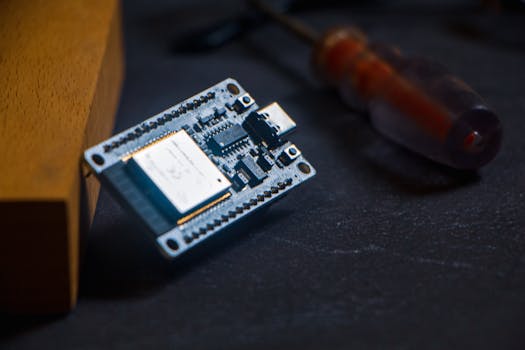
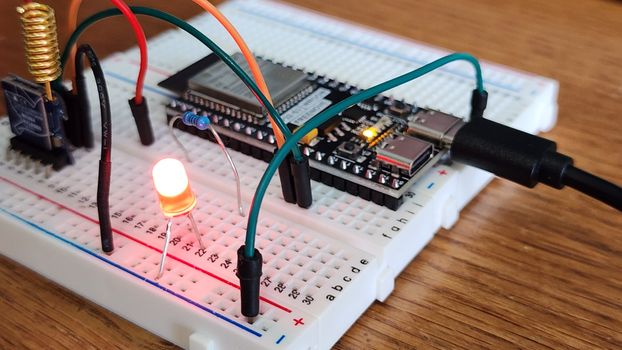
In German IoT engineering, software and hardware are two sides of the same coin. Companies like Siemens, Bosch, and Festo expect engineers to read schematics, understand GPIO pin mappings, and debug signal integrity issues. A 2026 ZVEI study revealed that 68% of IoT engineering failures in Germany are caused by poor hardware-software co-design. If your CV doesn’t mention hands-on experience with STM32, ESP32, or ARM Cortex-M series, you’ll often get filtered out before anyone looks at your GitHub. And if you’ve never used an oscilloscope to debug a SPI bus? You’re seriously limiting your options.
Hardware skills that matter:
- RTOS (FreeRTOS, Zephyr) configuration and task scheduling
- Sensor integration (I2C, SPI, UART) for temperature, vibration, and pressure
- Low-power design for battery-operated field devices
- Firmware OTA update mechanisms and secure boot
Data Privacy and Compliance: The German Special Sauce
Germany’s strict GDPR enforcement, combined with the EU Cyber Resilience Act (which took effect in 2025), makes data protection a core skill for IoT engineers. You’ll be expected to design systems that anonymize data at the edge, implement end-to-end encryption, and provide clear data flow documentation. A common interview task: propose an architecture that collects sensor data from a factory floor while ensuring no personal data leaves the premises. If you can’t talk about the Bundesdatenschutzgesetz (BDSG) or TÜV certification processes, even strong technical chops won’t save you.
Language Skills: English First, German as a Differentiator
Funny thing: a lot of people assume you need fluent German to work in Germany. In IoT, that’s not entirely true. English is the working language in most startups and in R&D departments at giants like SAP and Deutsche Telekom. But here’s the catch—if the role involves factory-floor communication, documentation for TÜV audits, or collaboration with local industrial partners, German becomes decisive. A 2026 analysis of IoT listings on StepStone found that 58% of senior positions required German, while junior roles were 80% English-friendly. Even A2-level German boosts your callback rate noticeably.
Practical Insight: How German Hiring Managers Think
From talking with hiring managers across Munich and Stuttgart, one thing is clear: German IoT teams value thoroughness over speed. Interviews often include a take-home project where you design a minimal viable IoT system—sensor selection, firmware architecture, cloud connection, and security assessment. Candidates who skimp on documentation, ignore error handling, or forget to mention testing strategies rarely move forward. A frequent mistake? Spending all your time on the cloud dashboard while the firmware specification is an afterthought. That doesn’t fly, especially in traditional sectors like manufacturing and automotive.
What separates top candidates:
- They provide a threat model for their IoT architecture
- They reference relevant DIN/ISO standards (e.g., ISO 27001, IEC 62443)
- They back decisions with quantitative data (power consumption, latency budgets)
Market Outlook: Salaries and Demand in 2026
The German IoT engineering market is thriving—there’s an 18% projected increase in job openings in 2026 versus last year, according to the Bundesagentur für Arbeit. Salaries typically range from €58,000 for junior roles to €92,000 for senior engineers with 5+ years of embedded experience. Specialists in functional safety (ISO 26262 in automotive, IEC 61511 in process automation) can earn up to €108,000. Most roles are concentrated in Bavaria (Munich, Nuremberg), Baden-Württemberg (Stuttgart, Karlsruhe), and North Rhine-Westphalia (Cologne, Dortmund). Remote work is becoming more common, but many IoT positions still require lab access—so don’t count on being fully remote.
IoT Engineer vs. Embedded Software Engineer: What’s the Difference in Germany?
German companies sometimes blur these titles, but the differences matter. An IoT engineer handles the whole communication chain: from sensor firmware to cloud backend and analytics. An embedded software engineer focuses on microcontroller-level code without cloud integration. For IoT roles, you need cloud platforms like AWS IoT Core, Azure IoT Hub, or Siemens MindSphere, plus edge processing tools (Azure IoT Edge, AWS Greengrass). If you come from a pure embedded background, you’ll need at least one cloud IoT service on your CV to qualify for IoT engineer listings.
Frequently Asked Questions
Do I need a German university degree to work as an IoT engineer in Germany?
No, but it helps for visa processing and for roles at large corporates that use the Tarifvertrag pay scale. A recognized foreign degree in electrical engineering, computer science, or mechatronics works fine. Many startups hire based on portfolio and GitHub projects—no degree required.
Are IoT engineers eligible for the EU Blue Card?
Yes. IoT engineering qualifies as a skilled profession. With a job offer and a salary above €43,800 (the 2026 threshold for shortage occupations), you can apply. IoT salaries almost always exceed this.
Which cloud platform should I learn for German IoT jobs?
AWS IoT Core and Azure IoT Hub are the most common choices. Siemens MindSphere dominates in manufacturing IoT. If you’re targeting Industry 4.0 roles, focus on Azure and OPC UA integration.
Is it true that German employers prefer specialists over generalists?
Partially. For IoT, they want T-shaped skills: deep expertise in one area (usually embedded or cloud) plus broad knowledge across the full stack. A pure generalist who knows “a little of everything” often struggles in technical interviews.
What certifications add value?
Cisco IoT certification, AWS Certified IoT, and TÜV functional safety certificates are highly regarded. For automotive IoT, an AUTOSAR basic course can give you an edge.
Preparing for 2026 and Beyond
The German IoT landscape is shifting toward edge AI and digital twin implementations. Engineers who can deploy tinyML models on microcontrollers or simulate factory processes with Eclipse Ditto and Eclipse Hono will stand out. And with the EU AI Act looming—affecting IoT systems that make decisions—regulatory awareness is becoming a differentiator. Start building a portfolio that shows real end-to-end ownership: design a simple environmental sensor, push data to a cloud dashboard, and wrap it with a threat model. That combination resonates far more with German IoT hiring teams than a stack of certificates ever could.