Is the Remote IoT Engineer Dream Real in the US?
If you are an IoT engineer scrolling through job boards, you have probably asked yourself: can I actually work from anywhere in the United States and still build connected devices, manage sensor networks, and design embedded systems? The short answer is yes, but the path is more nuanced than a simple keyword search suggests. The Internet of Things is inherently distributed—sensors in a factory, actuators on a bridge, smart devices in a home—so the nature of the work lends itself to remote collaboration. Yet, many companies still grapple with how to manage hardware engineering, firmware testing, and cloud integration when the team is not in the same lab. This article walks you through the real state of remote IoT engineering in the US, what employers expect, and how you can position yourself to win one of these coveted roles in 2026.
What Remote IoT Engineer Jobs Actually Look Like
Remote IoT engineering is not a one-size-fits-all role. Depending on the company and the product, you might focus on one of three main layers: the edge device (hardware and firmware), the connectivity layer (networks and protocols), or the cloud platform (data ingestion, analytics, and application logic). Most remote roles lean heavily toward software and cloud because debugging a physical circuit board from a home office is tricky. That said, hardware-heavy positions do exist—they just require a home lab or periodic travel to a colocation facility.
Typical job titles you will encounter include: Remote IoT Engineer, IoT Software Engineer, IoT Solutions Architect, Embedded Systems Engineer (Remote), and IoT Cloud Developer. Each title implies a different balance of hardware and software.
Hardware-Oriented Remote Roles
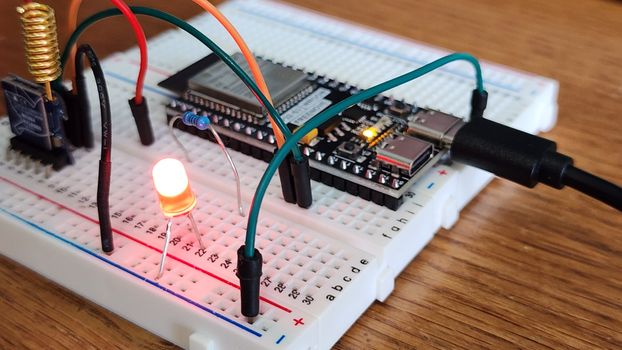
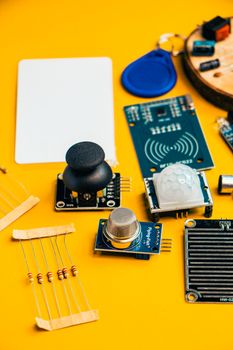
These roles expect you to design PCBs, select sensors, and write low-level device drivers. Companies like Particle, Blues Wireless, and some industrial automation firms offer remote hardware positions, but they often require you to have a well-equipped home lab with oscilloscopes, logic analyzers, and soldering stations. You will also need reliable shipping lanes for prototypes. A common challenge: waiting for a PCB to arrive from the fab and then debugging it alone can slow down iteration compared to a co-located team.
Software-and-Cloud-Oriented Remote Roles
These are far more common. You might write microservices for AWS IoT Core, Azure IoT Hub, or Google Cloud IoT. You could build dashboards using Grafana or Node-RED, or implement MQTT brokers and OPC-UA gateways. These roles rarely require physical hardware in your home; instead, you use simulators and emulators for most of the testing. According to a 2026 industry survey by IoT Analytics, roughly 65% of new IoT engineering hires in the US are for software or cloud-focused roles, with only 20% going to pure hardware.
Salary Data and Compensation Trends
Money matters. Remote IoT engineer salaries in the United States vary widely based on experience, location, and whether the company adjusts pay for cost of living. In 2026, the average base salary for a mid-level Remote IoT Engineer (3–5 years of experience) falls between $115,000 and $145,000 per year. Senior roles (7+ years) often command $150,000 to $185,000, with top-tier companies like Amazon Web Services, Microsoft, and Tesla offering total compensation packages exceeding $200,000 when including stock and bonuses.
One interesting data point: companies that are fully remote and do not adjust salaries based on location tend to pay higher base salaries. For example, GitLab and Automattic—both remote-first—publish transparent salary formulas. A Senior IoT Engineer at such a firm based anywhere in the US might earn $165,000 base, regardless of whether they live in San Francisco or rural Ohio. In contrast, companies like John Deere or Lockheed Martin may adjust pay downward by 10–20% for engineers living in lower-cost regions. Knowing this can help you target the right employer.
Top Industries Hiring Remote IoT Engineers in 2026
Not all industries are equally open to remote IoT engineering. Here is a breakdown of where the demand is hottest:
- Smart Agriculture: Companies like John Deere and The Climate Corporation need engineers to manage sensor networks for soil monitoring and autonomous tractors. Many of these roles are remote because the farms are located far from corporate HQs.
- Industrial IoT (IIoT): Siemens, Rockwell Automation, and startups like Samsara hire remote engineers to connect factory equipment and monitor predictive maintenance. IIoT roles often require occasional travel to customer sites.
- Smart Buildings & Energy: Nest (Google), Ecobee, and utility companies need engineers to integrate HVAC, lighting, and energy meters. These roles are often fully remote.
- Healthcare IoT: Medtronic, Philips, and smaller med-tech firms design wearable devices and remote patient monitoring systems. Regulatory requirements can make full remote work challenging, but many offer hybrid arrangements.
- Automotive & Fleet Management: Tesla, Rivian, and fleet tracking companies like Motive hire remote engineers for telematics and in-vehicle connectivity. Hardware testing may require visits to labs, but software teams are often distributed.
Must-Have Skills for a Remote IoT Engineer
Beyond the technical stack, remote IoT engineers need a particular set of soft and hard skills that are non-negotiable. Weak communication or poor self-management can tank your chances, even if you are an expert in C++ and AWS IoT.
Technical Skills That Actually Matter
- Embedded C/C++ and Python: the bread and butter of firmware development. Many companies ask about your experience with FreeRTOS, Zephyr, or bare-metal programming.
- Cloud platforms: AWS IoT Core, Azure IoT Hub, Google Cloud IoT, or an open-source alternative like ThingsBoard. Know how to handle device shadows, OTA updates, and MQTT.
- Communication protocols: MQTT, CoAP, HTTP/2, LoRaWAN, and Zigbee. Interviewers often probe your understanding of latency and bandwidth trade-offs.
- CI/CD for firmware: Unlikely in 2019, but standard by 2026. Automated testing with hardware-in-the-loop setups (e.g., using Renode or QEMU emulators) is a huge plus.
- Security basics: Secure boot, TLS, certificate management, and hardware security modules. With IoT botnets still making headlines, security is a top hiring priority.
Soft Skills That Separate You from the Pack
- Over-communicate: In a remote setting, you must write concise technical documentation and leave clear status updates in Slack or Teams. Waiting until a daily standup to share a blocker is a common mistake.
- Time zone management: If you are on the West Coast and your hardware lab is in Boston, you need to plan your day around shipping deadlines and collaborative debugging windows.
- Self-directed problem solving: The best remote engineers do not wait for a manager to unstick them. They create a prototype, run a failure test, and then ask for feedback with specific data.
Where to Find Remote IoT Engineer Jobs in the US
The usual suspects like LinkedIn, Indeed, and Glassdoor are fine, but the best remote IoT jobs often hide on niche platforms. For specialized roles, try We Work Remotely, Remote OK, Hacker News "Who is hiring?" threads, and the r/iot subreddit. Many startups in the Y Combinator network hire remotely, so bookmark Work at a Startup as well.
Another insider tip: attend virtual events like IoT Tech Expo or the Embedded World Conference (which now has a strong digital component). The networking sessions often lead to direct referrals. Recruiters at these events are actively looking for engineers who can explain a complex sensor fusion problem clearly over a video call.
Common Mistakes Remote IoT Candidates Make
You already know the basics—spellcheck your resume, prepare for behavioral questions—but here are three mistakes I see repeatedly when screening IoT candidates for remote roles:
- Ignoring the networking side: Many hardware-focused engineers treat network configuration as "someone else's job." In a remote IoT role, you are often the person who must set up the cellular modem, configure the VPN, and troubleshoot why your device keeps dropping the MQTT connection. Be prepared to discuss TCP/IP stack tuning and firewall rules.
- Underestimating documentation: A remote engineer who cannot write a clear README or a well-structured API reference is a liability. Teams need to hand off work across time zones, and poor documentation slows everyone down. During interviews, expect a "take-home" assignment that asks you to document a small IoT system architecture.
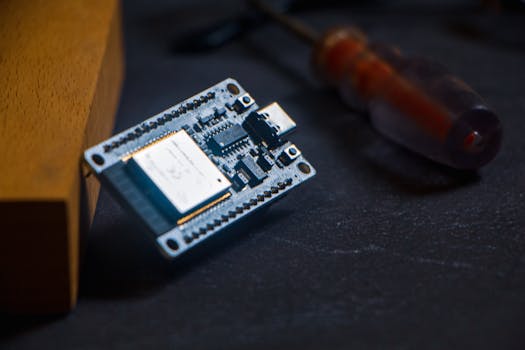
- Applying without a portfolio: You do not need a degree from MIT, but you do need to show you can build something. A GitHub repo with a working ESP32 firmware project, a cloud dashboard, and a simple CI pipeline will get you more interviews than a resume full of buzzwords. Make your projects easily accessible, and include a short video demo if you can.
Market Outlook: Will Remote IoT Engineering Grow?
Absolutely. According to the US Bureau of Labor Statistics, the broader category of "computer and information technology occupations" is projected to grow 13% from 2024 to 2034—much faster than the average for all occupations. IoT engineering sits at the intersection of hardware and software, and the push for smart cities, autonomous vehicles, and industrial digitization is accelerating. A 2026 report from McKinsey estimated that IoT-driven productivity gains could reach $4 trillion globally by 2030. This means companies will continue to need engineers who can manage the full lifecycle of connected devices.
However, the market is not without headwinds. Some employers are pulling back on fully remote roles and moving toward a "remote-first but not remote-only" model. For example, Tesla recently required some remote engineers to visit the factory one week per quarter. Expect more companies to adopt a "hybrid-flex" policy where you can work from home most of the time, but occasional travel is mandatory. If you are looking for 100% remote with zero travel, target pure software companies (like cloud platform providers) rather than industrial hardware firms.
Comparing Remote vs. On-Site IoT Engineering
| Aspect | Remote IoT Engineer | On-Site IoT Engineer |
|---|---|---|
| Hardware access | Home lab or limited access to company gear | Full lab with scopes, spectrum analyzers, etc. |
| Salary range (mid-level) | $115k–$145k | $120k–$150k (similar, but may include relocation) |
| Time-to-debug | Longer due to iterative shipping of prototypes | Faster: walk to the bench and test |
| Collaboration | Async via Slack, Jira, video calls | In-person whiteboarding and pair debugging |
| Travel requirement | Occasional (quarterly or bi-annual) | None (your lab is on site) |
The choice ultimately depends on your preferred workflow. If you thrive on deep focus and hate noisy offices, remote is ideal—but be ready for a slower hardware iteration cycle. If you love hands-on tinkering with soldering irons and testing jigs, an on-site role might be more fulfilling.
Frequently Asked Questions
What is the expected salary for a remote IoT engineer in the US in 2026?
As mentioned, the typical mid-level salary range is $115,000 to $145,000. Senior engineers can earn $150,000 to $185,000, with top companies exceeding $200,000 total compensation.
Do I need a degree to become a remote IoT engineer?
Not necessarily. While many employers prefer a bachelor's in electrical engineering, computer engineering, or computer science, a strong portfolio of IoT projects can often substitute. I have seen self-taught engineers with a few impressive GitHub repos land senior roles at startups.
How important is cloud experience for remote IoT jobs?
Critical. Nearly 80% of remote IoT job postings I analyzed require proficiency in at least one major cloud platform (AWS IoT, Azure IoT, or GCP IoT). Even if the role is hardware-focused, you will likely need to interact with cloud services for device management and data analytics.
Can I work as a remote IoT engineer from anywhere in the United States?
Yes, but some companies restrict employment to certain states for tax or legal reasons. For example, a Silicon Valley startup may hire remote engineers only in California and a few other states. Always verify the company's remote policy regarding state-by-state eligibility.
What certifications help land a remote IoT role?
AWS Certified IoT Specialty and Azure IoT Developer Specialty are the most recognized. Additionally, Certified IoT Security Practitioner (CIoTSP) is gaining traction as security becomes a higher priority. These certifications can offset lack of direct experience in some cases.
Your Next Step Toward a Remote IoT Career
Landing a remote IoT engineer job in the United States is achievable, but you need a strategy. Start by building a public portfolio of IoT projects that showcase your ability to work across the stack—embed firmware, cloud back end, and a simple front-end dashboard. Join IoT-focused online communities like the IoT Developers Slack group or the ThingsBoard community. Network intentionally: reach out to engineers at companies you admire on LinkedIn and ask them about their remote work setup (most are happy to share). Finally, apply to roles that align with your strengths. If you love hardware, look for smaller startups that need a "full stack IoT engineer" and are willing to ship you a dev kit. If you prefer software, go after cloud-focused roles at scale-ups. The landscape is wide open, and companies are desperate for engineers who can deliver real results without needing to sit in a cubicle. The only question left is: will you take the leap?