Remote SCADA Engineer Jobs in France: A Realistic Career Assessment
If you're a SCADA engineer thinking about going remote in France, the first thing to get straight is this: industrial control systems have always been bolted to physical infrastructure. A SCADA engineer who can't walk up to a substation, a water treatment plant, or a production line is — for many employers — simply less useful. That constraint doesn't kill the remote market in France. It just shapes it. And ignoring it is how you end up firing off applications that go nowhere.
The real question isn't whether remote SCADA work exists here. It does. The question is which slices of the market genuinely support it, what they pay, and what separates the candidates who get hired from the ones who don't.
France runs one of Europe's largest industrial automation markets. Energy operators like EDF, Engie, and TotalEnergies. Transport heavyweights SNCF and RATP. Water utilities Veolia and Suez. Add a dense manufacturing base in pharma, automotive, and food processing, and you've got a lot of SCADA systems humming along — each sector adopting remote and hybrid work at its own pace. The data below reflects that uneven reality.
Which SCADA Roles in France Actually Support Remote Work
Here's the pattern that matters: the more a role leans toward software configuration, architecture, and data integration, the easier it goes remote. The more it leans toward panel wiring, commissioning, and hands-on troubleshooting, the harder it is to detach from the site.
High Remote Compatibility
- SCADA system architect: Designs telemetry architectures, historians, and redundancy strategies for system integrators and utility engineering departments. Mostly remote, with the occasional site visit.
- SCADA application developer: Configures and scripts platforms like Ignition, AVEVA (Wonderware), or Siemens WinCC. Screen-based work from start to finish.
- OT cybersecurity analyst with SCADA focus: Monitors and hardens industrial networks. French regulations — ANSSI guidelines, the NIS2 transposition — have pushed demand for this profile up sharply since 2024.
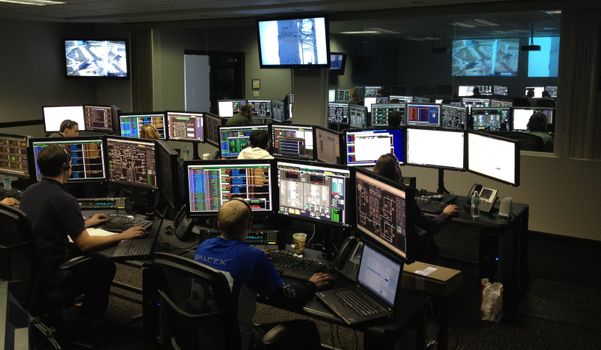
- SCADA support and monitoring engineer: Handles Level 2 and Level 3 support, remote diagnostics, and incident escalation for multi-site operators.
Low Remote Compatibility
- Commissioning engineer — needs physical presence for loop checks and startup.
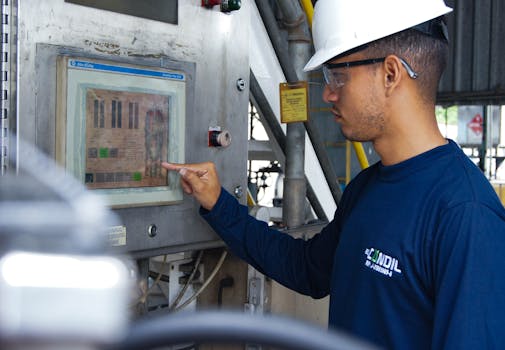
- Field instrumentation technician — inherently on-site.
- Maintenance engineer in regulated environments — site access is baked into the job definition.
One mistake I see constantly: applicants chase any posting with "SCADA" in the description without checking whether it's functionally a commissioning role with remote flexibility bolted on as a formality. Looking at French job boards in 2026, roughly 35–40% of "SCADA engineer" postings are hybrid or fully remote. The rest want you on-site, close to all the time.
Salary Data for Remote SCADA Engineers in France (2026)
French salary structures don't map cleanly onto US or UK equivalents. Higher employer social contributions, profit-sharing mechanisms, and a strong convention collective system all bend the numbers. What follows are gross annual ranges for remote or hybrid SCADA roles, based on 2026 market observations across Île-de-France, Auvergne-Rhône-Alpes, and Occitanie.
- Junior (0–2 years): €38,000 – €45,000. Remote options are thin at this level — employers want supervised on-site learning first.
- Mid-level (3–6 years): €48,000 – €62,000. This is where remote and hybrid contracts become genuinely common.
- Senior (7+ years): €65,000 – €85,000. Architects and OT security specialists sit at the top of this band, especially in energy and defense-adjacent sectors.
- Freelance / contractor (TJM): €500 – €850 per day for specialist SCADA and OT security missions. Often fully remote with periodic travel.
Paris-region roles typically carry a 10–15% premium over provincial equivalents. But fully remote contracts have narrowed that gap since 2023. A senior SCADA architect working remotely for a Paris-headquartered utility from Lyon or Nantes can realistically land within 5% of the Paris on-site equivalent — if the contract permits full remote status.
Technical Skills That Drive Remote Hiring in France
French employers apply a slightly different filter to remote SCADA candidates than they do to on-site ones. Less oversight on the job means autonomy and documentation discipline become explicit interview criteria. You'll be asked to prove it.
Platforms in Demand
- AVEVA (Wonderware, System Platform, Historian): Dominant across French manufacturing and water utilities.
- Ignition (Inductive Automation): Growing fast in renewable energy and mid-sized integrators.
- Siemens WinCC and TIA Portal: Standard in automotive and heavy industry.
- Schneider Electric EcoStruxure: Particularly relevant for building management and distribution networks.
Adjacent Competencies
- Industrial protocols: Modbus TCP, OPC UA, DNP3, IEC 61850 (critical for grid roles).
- Scripting: Python and PowerShell for automating SCADA tasks.
- Networking: VLAN segmentation, industrial firewalls, Purdue model architecture.
- OT cybersecurity standards: IEC 62443, ANSSI recommendations, NIS2 requirements for critical infrastructure operators.
- Language: French at B2 or higher for the majority of permanent roles — even when the technical work runs in English. Freelance missions with international integrators are more tolerant of English-only profiles.
Practical Insights: Hiring Trends and Common Pitfalls
Recruitment patterns for remote SCADA roles in France have shifted noticeably since 2022. Three trends are worth watching.
Trend 1: Hybrid beats fully remote. French labor law and management culture both lean toward hybrid. When an employer says "remote," they often mean two to three days on-site per week. Fully remote contracts do exist, but they cluster in support, development, and cybersecurity functions — and they're far more common at scale-ups and international integrators than at large utilities.
Trend 2: Cybersecurity credentials become the differentiator. Since NIS2 was transposed into French law, SCADA engineers with OT security certifications (GICSP, IEC 62443) are reporting faster hiring cycles and 10–15% salary premiums over generalist peers.
Trend 3: The freelance market keeps expanding. French industrial groups are increasingly bringing in freelance SCADA specialists for migration projects — legacy Wonderware to AVEVA, on-premise to cloud historians. These missions typically run six to twelve months, often fully remote with quarterly site visits.
Common mistakes I keep seeing among applicants:
- Applying to on-site commissioning roles and trying to negotiate remote status later. Almost never works.
- Underestimating the French language requirement. Plenty of international candidates assume English is enough because the tooling is English. Hiring managers at French industrial firms usually want functional French for team integration.
- Presenting generalist automation experience without a specific SCADA platform depth. French employers screen hard for platform specialization.
- Failing to document remote work capability. Bring concrete examples of remote troubleshooting, documentation practices, and asynchronous collaboration.
Market and Career Outlook Through 2028
France's industrial policy — including the France 2030 investment plan — is pouring significant funding into industrial digitization, nuclear maintenance, and renewable energy grid integration. Each of these areas increases SCADA workload. The French grid operator alone manages tens of thousands of remote terminal units, and modernization programs stretch well past 2027.
Demographics reinforce the demand. A substantial share of French automation engineers are within ten years of retirement, and replacement hiring hasn't kept pace with attrition. Fold in the difficulty of recruiting OT security specialists, and you get a candidate-favorable market for mid-level and senior SCADA professionals through the end of the decade. Remote-friendly segments — particularly cybersecurity and system architecture — will likely see the strongest competition from international candidates, since these roles travel easily across EU borders.
France Compared to Other European Markets
Weighing France against Germany, the Netherlands, or Switzerland? A few structural differences matter. French SCADA salaries come in lower than Swiss (roughly 40–60% lower at equivalent seniority) and slightly below German equivalents. But the total package often includes stronger social protections, healthcare coverage, and — at many companies — profit-sharing (intéressement and participation) that adds 5–10% to effective compensation.
Remote work regulation is also more employee-protective in France than in most EU countries, with clear rights to disconnect and formalized remote work agreements. If you prioritize work-life structure over maximum gross salary, that's a material advantage. If you're optimizing for net income, Switzerland and Luxembourg still win — though both have far smaller SCADA job volumes than France.
Frequently Asked Questions
Can non-EU citizens get remote SCADA engineer jobs in France?
Fully remote roles based in France generally still require a French work contract, which triggers work permit requirements. The "Passeport Talent" visa covers qualified engineers, but the employer has to demonstrate the role genuinely needs to be based in France. Freelance remote work for French clients from abroad is technically possible but creates tax and social contribution complications that scare off most employers.
What is the realistic remote percentage for SCADA roles in France?
Based on 2026 job posting analysis: roughly 20% fully remote, 30% hybrid (two to three days on-site), and 50% on-site with limited flexibility. Fully remote roles concentrate in support, development, and OT cybersecurity.
Which French cities have the most remote-friendly SCADA employers?
Paris leads on absolute volume, but Lyon, Toulouse, Grenoble, and Nantes all have strong industrial automation ecosystems. Remote roles aren't tightly bound to these cities, though employers generally prefer candidates close enough for occasional on-site requirements.
Do French employers accept SCADA certifications from other countries?
International certifications from AVEVA, Siemens, or ISA are recognized. OT security certifications aligned with IEC 62443 carry the most weight. French language proficiency still matters more than certification origin.
What recruiting channels work best for remote SCADA jobs in France?
Specialized platforms — APEC for engineering roles, LinkedIn, and niche automation networks — outperform generalist job boards. Freelance missions are frequently brokered through French ESN (entreprises de services du numérique) and specialized staffing agencies.
Conclusion
The remote SCADA engineer job market in France is real but segmented. Fully remote positions cluster in cybersecurity, application development, and support functions. Commissioning and field roles remain stubbornly resistant to remote arrangements.
Candidates who align their applications with the remote-compatible segments, invest in OT security credentials, and demonstrate French-language capability will find a market with structural demand driven by industrial digitization and workforce attrition. Compensation is competitive within the European context rather than top-of-market. But the combination of remote flexibility, employment protections, and stable industrial demand makes France a defensible long-term choice — provided you target the right segment of the market.