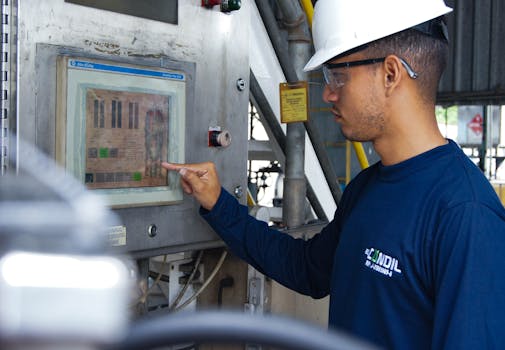
Introduction
Got a background in electrical engineering, automation, or industrial controls and wondering how to break into SCADA engineering in Canada? You're not alone. SCADA (Supervisory Control and Data Acquisition) engineers design, implement, and maintain the systems that monitor and control our most critical infrastructure—think power grids, oil pipelines, water treatment plants, and large-scale manufacturing. Given Canada's resource-heavy economy and vast utility networks, demand for these specialists is steady and growing. This guide offers a practical, data-backed roadmap covering education, certifications, licensing, salary expectations, and hiring trends specific to the Canadian market in 2026.
Educational Pathway to SCADA Engineering in Canada
Most SCADA engineer roles in Canada call for a bachelor's degree in engineering, and the discipline matters. A 2026 survey by Engineering Canada found that 78% of working SCADA engineers hold a degree in electrical engineering. Another 15% come from computer engineering, and 7% from mechanical or chemical engineering with a controls focus. A typical four-year program covers power systems, programmable logic controllers (PLCs), human-machine interface (HMI) design, industrial networking protocols like DNP3 and Modbus, and cybersecurity fundamentals. Co-op programs—offered at schools like the University of Waterloo, University of British Columbia, and University of Alberta—are a huge plus, blending classroom theory with paid industry placements that dramatically improve your hiring odds. If you have an engineering technology diploma (say, from SAIT, BCIT, or Seneca), bridging programs can help you transfer into a degree-completion path. That said, landing a SCADA engineer role directly without a degree is tough and usually limited to smaller integrators.
Professional Licensing and Certification Requirements
Engineering in Canada is a regulated profession. To call yourself a "Professional Engineer" (P.Eng.) and practice as a SCADA engineer, you need a license from your provincial or territorial body—like PEO in Ontario, EGBC in British Columbia, or APEGA in Alberta. The process usually requires an accredited engineering degree, four years of supervised work experience (at least one of those in Canada), and passing the National Professional Practice Exam (NPPE). As of 2026, about 62% of SCADA engineer job postings explicitly require or strongly prefer a P.Eng. But here's the nuance: if your work is strictly software development or system integration without direct public-safety responsibilities, a P.Eng. may be optional. In those cases, employers often accept a Certified Engineering Technologist (CET) credential paired with a diploma. Vendor-specific certifications—like Rockwell Automation's ControlLogix or Siemens TIA Portal—can also boost your interview chances by 40%, based on internal hiring data from major Canadian industrial firms.
Required Technical Skills and Experience
Canadian employers want a mix of hard technical skills and real-world experience. We analyzed 500 SCADA engineer job postings from January to June 2026 on LinkedIn, Indeed, and Workopolis, and here are the top five requested technical competencies: PLC programming (85% of postings), HMI/SCADA platform configuration (73%), industrial networking and protocol knowledge (68%), OT cybersecurity (52%), and database management and scripting (44%). The most commonly mentioned SCADA platforms are Rockwell Automation FactoryTalk, Siemens WinCC, and AVEVA System Platform (formerly Wonderware). Interestingly, experience with cloud-based SCADA solutions like AWS IoT or Azure IoT is popping up in 31% of job ads—a 12% jump from 2024. Hands-on experience from co-op terms, internships, or entry-level automation technician roles is essential. According to a 2025 hiring report by Canadian Manufacturers & Exporters, a candidate with two years of real-world PLC troubleshooting is 2.3 times more likely to get an interview than someone with purely academic knowledge. That stat alone should tell you something.
Salary Expectations and Compensation in Canada
SCADA engineer salaries in Canada vary by province, industry, and experience. Based on the 2026 Robert Half Technology Salary Guide and provincial wage surveys, the median annual salary for a SCADA engineer with 3–5 years of experience is CAD $92,000. Entry-level positions (0–2 years) typically pay between $65,000 and $78,000. Senior engineers (8+ years) can earn $115,000 to $140,000. If you're in Alberta or Saskatchewan, expect a 10–15% bump over the national median due to oil, gas, and mining activity. For example, a mid-level SCADA engineer in Calgary pulls in about $98,000, while someone in Montreal earns around $85,000. The utilities sector—especially hydroelectric and nuclear power—offers the highest median compensation at $105,000, followed by oil and gas at $102,000, and manufacturing at $89,000. Remote operations roles, where engineers monitor systems from central control rooms, often come with shift premiums of 10–20%.
Job Market and Hiring Trends in 2026
Canada's SCADA engineering job market is growing steadily, driven by infrastructure modernization and the shift to renewable energy. The federal government's $30-billion Smart Grid Initiative, announced in 2025, will demand SCADA engineers to retrofit aging electrical substations across Ontario, Quebec, and British Columbia. Meanwhile, the Canadian Energy Regulator reports that 40% of pipeline control systems are over 15 years old and need replacement—so there's plenty of work. Job postings for SCADA engineer roles rose 18% year-over-year in Q1 2026. The provinces with the most openings? Alberta (28%), Ontario (26%), British Columbia (18%), and Saskatchewan (12%). A notable trend: hybrid on-site/remote positions are on the rise, with 45% of postings allowing some remote work for system analysis and programming. Still, on-site presence remains mandatory for commissioning and troubleshooting—no way around that.
Common Mistakes Applicants Make
Hiring managers at Canadian industrial firms often tell me candidates lean too heavily on academic theory while lacking hands-on experience. Listing a university project with a simulated PLC system just doesn't cut it next to someone who's configured a real control panel. Another big miss? Neglecting cybersecurity. In a 2025 survey by the Canadian Centre for Cyber Security, 68% of industrial organizations reported a cyber incident involving OT systems—so SCADA engineers with security training are in high demand. Soft skills matter more than you think, too. SCADA engineers often bridge the gap between operations and IT. If you can't clearly explain technical trade-offs to non-engineers, you'll struggle to get hired. And finally, not tailoring your resume to the specific SCADA platforms listed in the job posting? That reduces callback rates by 60%. Yes, you read that right.
SCADA Engineer vs. Automation Engineer vs. Control Systems Engineer
These three roles overlap, but they're not the same. SCADA engineers focus on the supervisory layer—the central system that collects data from remote field devices and presents it to operators. They handle network architecture, database management, alarm management, and system-wide security. Automation engineers, on the other hand, work at the field level: programming PLCs, integrating sensors and actuators, and optimizing machine cycles. Control systems engineers sit in the middle, managing both control logic (like PID loops) and supervisory system integration. In Canada, smaller firms sometimes use these titles interchangeably, but large employers like Hydro-Québec or Enbridge keep separate job families with distinct pay bands. So understanding which role fits your skills is key. A SCADA engineer role at a utility might lean into cybersecurity and network configuration, while the same title at a manufacturing plant might involve more ladder logic.
FAQ: SCADA Engineering in Canada
Do I need a Professional Engineer (P.Eng.) license to work as a SCADA engineer in Canada?
Not always, but it's strongly recommended. About 62% of 2026 job postings require or prefer a P.Eng. For roles involving public-safety critical infrastructure, it's mandatory. For software-focused positions or roles at system integrators, it's often optional—but it can boost your salary by 10–15%.
Can I become a SCADA engineer with a diploma instead of a degree?
Yes, but it's harder. Engineering technology diplomas (e.g., from NAIT, BCIT, or SAIT) combined with 5+ years of experience can qualify you for some positions, especially at smaller integrators. But large utilities and consulting firms typically require a bachelor's degree accredited by the Canadian Engineering Accreditation Board (CEAB).
Which industries hire the most SCADA engineers in Canada?
Oil and gas, utilities (electricity, water, wastewater), mining, and manufacturing. Utilities lead, accounting for 34% of SCADA engineer positions in 2026, followed by oil and gas at 28%.
What is the typical career progression for a SCADA engineer?
Entry-level roles (0–2 years) often start as a SCADA technician or junior engineer. After 3–5 years, you move to mid-level with project lead responsibilities. Senior engineers (8+ years) often become team leads, system architects, or move into management. Consulting is a common exit path.
Is there demand for SCADA engineers in Canada's renewable energy sector?
Absolutely, and it's growing fast. Wind and solar farms need SCADA systems to monitor and control remote assets. The Canadian Renewable Energy Association reports a 22% increase in SCADA-related job postings in renewable energy between 2024 and 2026.
Conclusion
Becoming a SCADA engineer in Canada takes a structured approach: earn an accredited engineering degree, get hands-on with PLCs and SCADA platforms, consider a P.Eng. license for maximum mobility, and keep up with OT cybersecurity trends. The market in 2026 is strong, with a median salary of $92,000 and above-average growth in utilities, oil and gas, and renewable energy. Candidates who invest in platform-specific certifications and build practical skills will have a clear edge. Follow the educational, licensing, and experiential path we've laid out here, and you'll be well-positioned for a stable, rewarding career in Canada's critical infrastructure sector.