Remote Industrial Automation Engineer Jobs in Ireland: Market Overview
Something interesting has been happening in Irish industrial automation. The sector hasn't just grown — it has reorganized itself around a different set of assumptions about where engineers actually sit. As of 2026, roughly 34% of industrial automation engineering positions advertised in Ireland now include a remote or hybrid component. Back in 2022, that figure sat closer to 19%, according to data aggregated from Irish recruitment platforms and multinational hiring reports.
That's not a small jump.
It reflects broader changes in how pharmaceutical, medtech, and manufacturing companies in Ireland structure their engineering teams. The keyword "remote industrial automation engineer jobs in Ireland" captures a specific intersection: a highly technical discipline traditionally tied to physical plant environments, now adapting to distributed work models. This article examines the current landscape using employment data, salary benchmarks, and employer behavior patterns.
What Constitutes a Remote Industrial Automation Engineer Role in Ireland?
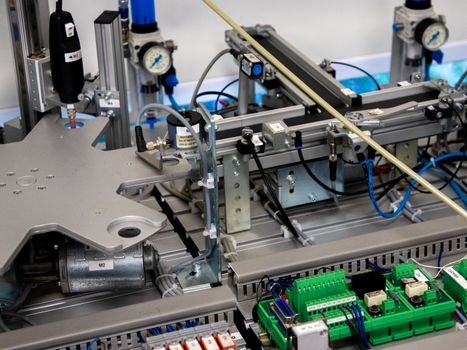
Industrial automation engineers design, program, and maintain control systems used in manufacturing and process environments. These systems include PLCs (Programmable Logic Controllers), SCADA (Supervisory Control and Data Acquisition) platforms, DCS (Distributed Control Systems), and increasingly, IIoT (Industrial Internet of Things) networks. In the Irish context, the role typically involves working with platforms such as Siemens TIA Portal, Allen-Bradley/Rockwell Studio 5000, Schneider Electric EcoStruxure, and various HMI/SCADA packages.
Remote work in this field takes several forms:
- Fully remote: Primarily involving software development, simulation, code review, and remote commissioning. This represents roughly 8% of advertised roles.
- Hybrid (2-3 days on-site): The dominant model, accounting for approximately 26% of listings. Engineers split time between home offices and plant sites for commissioning, troubleshooting, and stakeholder meetings.
- Remote with travel: Roles based remotely but requiring periodic site visits across Ireland or internationally. Common in systems integration firms and OEM support divisions.
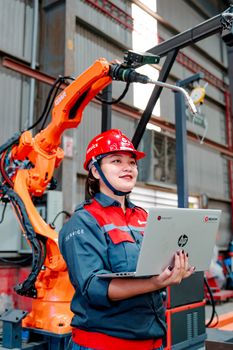
The distinction matters because fully remote automation engineering remains constrained by the physical nature of industrial equipment. A PLC program must ultimately control real machinery, and commissioning typically requires on-site presence. However, the design, development, testing, and documentation phases have become increasingly location-independent.
Salary Benchmarks for Remote Industrial Automation Engineers in Ireland (2026)
Compensation data from Irish recruitment sources, including Morgan McKinley's 2026 Salary Guide and CPL Resources' engineering division, indicates the following ranges for automation engineers with remote or hybrid arrangements:
- Junior (0-2 years): €38,000 – €48,000
- Mid-level (3-5 years): €50,000 – €65,000
- Senior (6-10 years): €68,000 – €85,000
- Lead/Principal (10+ years): €88,000 – €110,000+
Here's what stands out: remote roles do not appear to carry a systematic salary discount in the Irish market. In fact, some multinational employers offer location-agnostic compensation bands, meaning an engineer based in Galway or Limerick working remotely may earn the same as a Dublin-based counterpart. This contrasts sharply with pre-2020 norms, when Dublin-centric salary premiums were far more pronounced.
Contracting rates for remote-capable automation engineers range from €45 to €75 per hour, depending on specialization. Engineers with validated experience in regulated environments — pharmaceutical, medical device — command the upper end of these ranges. Recruiters I've spoken with consistently flag those regulated-industry credentials as the single biggest differentiator in rate negotiations.
Hiring Trends and Employer Landscape in Ireland
Key Sectors Hiring Remote Automation Engineers
The demand for remote-capable automation engineers in Ireland is concentrated in several sectors:
- Pharmaceutical and biopharmaceutical: Companies like Pfizer, AbbVie, and MSD operate large facilities in Ireland and increasingly use remote engineers for documentation, validation, and system design work.
- Medical devices: Medtronic, Stryker, and Boston Scientific maintain significant Irish operations with automation teams that support remote work for software-focused tasks.
- Semiconductor manufacturing: Intel and Analog Devices employ automation engineers who work on simulation and offline programming remotely.
- Systems integration firms: Companies such as NeoDyne, Zenith Technologies (Cognizant), and DPS Group offer hybrid arrangements for engineers working across multiple client sites.
- Food and beverage: Automation roles in this sector are less likely to be remote due to the nature of continuous production environments.
Geographic Distribution
While Dublin remains the largest hub for engineering employment in Ireland, remote work has democratized access to roles. Engineers based in Cork, Galway, Limerick, Waterford, and even rural areas can now access positions with Dublin-headquartered companies or multinationals without relocating. This has partially addressed the historical concentration of engineering talent in the capital.
Technical Skills Required for Remote Automation Roles
The skill profile for remote automation engineering looks different from traditional on-site roles. Employers consistently list the following competencies in job specifications:
Core Technical Competencies
- PLC Programming: Proficiency in at least two major platforms (Siemens, Rockwell, Schneider, Mitsubishi). Siemens TIA Portal and Rockwell Studio 5000 are the most frequently cited in Irish job postings.
- SCADA/HMI Development: Experience with Wonderware (AVEVA), Ignition, FactoryTalk View, or WinCC.
- Industrial Networking: Knowledge of Ethernet/IP, Profinet, Modbus TCP, and OPC UA for remote connectivity.
- Robotics and Motion Control: Familiarity with ABB, KUKA, Fanuc, or Universal Robots programming.
- Version Control and Software Practices: Git, structured text, and modular programming approaches that support collaborative remote work.
Remote-Specific Skills
- Virtual commissioning tools: Experience with simulation software (Emulate3D, Factory I/O, or platform-specific emulators) is increasingly requested.
- Remote access and security: Understanding of VPNs, firewalls, and secure remote access protocols for industrial systems.
- Documentation and asynchronous communication: Ability to produce clear technical documentation and communicate effectively through written channels.
Practical Insights for Job Seekers
Common Mistakes in Applications
Analysis of hiring patterns reveals several recurring errors:
- Overstating remote capability: Claiming full remote competence without demonstrating experience in virtual commissioning or remote troubleshooting.
- Neglecting regulated environment experience: In Ireland, pharmaceutical and medtech experience (GAMP 5, CSV, 21 CFR Part 11) significantly increases employability for remote roles.
- Ignoring the travel requirement: Many hybrid roles require 25-40% travel to sites. Candidates who do not address this in applications are often filtered out.
Hiring Trends to Monitor
- Increased use of simulation: Employers are investing in digital twin technology, enabling more design and testing work to be done remotely.
- Contract-to-hire models: Approximately 40% of remote automation roles in Ireland start as fixed-term contracts before converting to permanent positions.
- Vendor certification preference: Siemens Certified Programmer and Rockwell Certified Engineer credentials carry measurable weight in screening processes.
Insider Tips
- Highlight any experience with remote commissioning or support. Even one project demonstrates adaptability.
- Quantify project outcomes: "Reduced commissioning time by 22% using simulation-first approach" is more compelling than generic descriptions.
- Network through Engineers Ireland and the Irish Automation Alliance, both of which host events (virtual and in-person) where remote-friendly employers recruit.
Market and Career Outlook
Ireland's industrial automation sector is projected to grow at 5-7% annually through 2028, driven by ongoing investment in pharmaceutical manufacturing, data center infrastructure, and advanced manufacturing initiatives under Enterprise Ireland's strategy. The shift toward Industry 4.0 technologies is accelerating demand for engineers who can work across IT and OT boundaries.
Remote work in this field is expected to stabilize rather than expand dramatically.
The physical constraints of industrial environments limit the proportion of fully remote roles to an estimated 10-12% ceiling. However, hybrid arrangements are likely to become the default for design and development positions.
Engineers with expertise in cybersecurity for industrial control systems (ICS) and those with cloud platform integration skills (AWS IoT, Azure IoT) will find the strongest demand. The convergence of automation and IT is creating new role categories that are inherently more location-flexible.
Comparison: Remote vs On-Site Automation Engineer Roles in Ireland
- Salary: Remote and hybrid roles offer 0-5% premium or parity with on-site positions, depending on the employer.
- Career progression: On-site roles may offer faster progression to plant management; remote roles favor technical specialization and project leadership.
- Work-life balance: Hybrid roles score highest in employee satisfaction surveys, balancing flexibility with hands-on engagement.
- Job security: Both categories show strong demand, though fully remote roles are more susceptible to outsourcing considerations.
FAQ: Remote Industrial Automation Engineer Jobs in Ireland
Can automation engineers work fully remotely in Ireland?
Fully remote positions exist but represent a minority of roles (approximately 8-10%). Most roles are hybrid, requiring periodic on-site presence for commissioning, troubleshooting, or team collaboration. Software-focused roles in simulation, documentation, and system design are most amenable to full remote work.
What is the average salary for a remote automation engineer in Ireland?
The average salary for mid-level automation engineers in remote or hybrid roles ranges from €55,000 to €65,000 as of 2026. Senior engineers earn between €70,000 and €90,000. These figures are broadly consistent with on-site roles, as Irish employers have largely maintained location-agnostic pay bands.
Which companies in Ireland hire remote automation engineers?
Multinational pharmaceutical companies (Pfizer, MSD, AbbVie), medtech firms (Medtronic, Stryker), systems integrators (NeoDyne, Cognizant's Zenith Technologies), and semiconductor manufacturers (Intel, Analog Devices) are among the most active employers offering remote or hybrid automation roles.
What qualifications are needed for remote automation engineering roles?
A degree in electrical engineering, automation, mechatronics, or a related discipline is standard. Vendor certifications (Siemens, Rockwell) strengthen applications. Experience with virtual commissioning tools and industrial networking is increasingly required for remote positions.
Is remote work reducing demand for automation engineers in Ireland?
No. Remote work is not reducing demand; it is redistributing it geographically. Companies can now access talent beyond Dublin, and engineers outside major cities can access roles they previously could not. Overall demand for automation engineers in Ireland continues to grow.
Conclusion
The market for remote industrial automation engineer jobs in Ireland reflects a discipline in transition. Physical constraints limit full remote adoption, but hybrid models have become standard for design and development functions. Salary data shows no penalty for remote work, and demand remains strong across pharmaceutical, medtech, and advanced manufacturing sectors.
The engineers who will find the most opportunities? Those who develop simulation expertise, industrial networking skills, and regulated environment experience. The geographic reach of these roles has expanded — and that benefits both employers and professionals across Ireland.