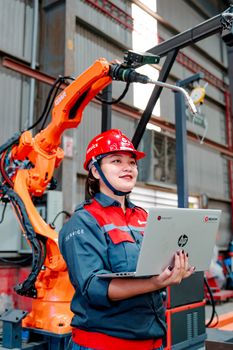
Why Canada's Automation Boom Is Redefining the Skill Set
Canada's industrial automation sector isn't just growing; it's fundamentally reshaping how manufacturing, energy, and logistics operate. A recent report from Canadian Manufacturers & Exporters showed that over 70% of manufacturers are accelerating their adoption of automation technologies, yet nearly 60% say they struggle to find engineers with the right mix of skills. This isn't a niche problem—it's a national productivity issue. The demand for industrial automation engineers in Canada is projected to grow by 12% over the next five years, according to the federal Job Bank, but the skill set employers expect has shifted dramatically. It's no longer enough to just know a PLC or two. The modern automation engineer in Canada needs a hybrid profile that blends traditional control systems with modern IT, data analytics, and even cybersecurity. If you're entering this field or looking to upgrade, understanding these evolving requirements is your first step to staying relevant.
The Core Non-Negotiables: PLCs, HMIs, and SCADA
Let's start with the fundamentals. If you don't have a solid grasp of Programmable Logic Controllers (PLCs), you're not an automation engineer—full stop. In Canada, the most sought-after platforms are Allen-Bradley (Rockwell) and Siemens, with Schneider Electric also having a strong presence, especially in Quebec. But here's the kicker: simply knowing the brands isn't enough. Employers now expect you to understand the underlying logic design, not just drag-and-drop programming. You need to be comfortable with ladder logic, structured text, and function block diagrams. Most job postings for industrial automation engineer in Canada list 'PLC programming' as a basic requirement, but the real differentiator is your ability to troubleshoot complex programs under pressure.
Beyond PLCs, you must be fluent in Human-Machine Interfaces (HMIs) and SCADA systems. Wonderware, FactoryTalk View, and WinCC are common names you'll see. But the trend is moving toward web-based and cloud-connected HMIs. If you're still only familiar with older, standalone HMI software, you're behind the curve. In 2026, the ability to integrate SCADA with IoT platforms like Ignition or even AWS IoT is quickly becoming a standard expectation. The days of isolated control rooms are fading; data is now the product, and your SCADA system is its gateway.
Networking and Cybersecurity: The New Table Stakes
Here's where the Canadian market really differs from what you might have learned in a generic automation course. With the rise of Industry 4.0 and the Canadian government's push toward smart manufacturing, networks are no longer optional. You need to understand industrial protocols like EtherNet/IP, Profinet, and Modbus TCP, plus the basics of network architecture—VLANs, subnets, and firewalls. But more critically, cybersecurity has become a mandatory skill. The 2025 Canadian Cyber Incident Report noted a 40% increase in attacks on manufacturing firms, and many companies now require automation engineers to implement security measures at the OT level. Knowing how to segment networks, apply patches without disrupting production, and configure secure remote access is no longer 'nice to have'—it's a hard requirement in most job descriptions.
If you're coming from a traditional electrical background, this is the area where you'll need to invest significant time. Many engineers I've spoken with admit that networking was the weakest part of their training. But in the current climate, an automation engineer who can't configure a managed switch or understand the difference between a DMZ and a VLAN will struggle to get past the first interview. The good news is that Canadian colleges and online platforms are now offering specialized courses in OT cybersecurity and industrial networking, so there's no excuse to ignore this.
Robotics and Advanced Motion Control
Robotics is another cornerstone of the Canadian automation landscape, particularly in Ontario's automotive sector and British Columbia's aerospace industry. You don't necessarily need to be a robotics engineer, but you must be able to program and integrate robotic cells. Fanuc, ABB, and KUKA are the dominant brands, and experience with their offline programming software is a major plus. More importantly, understanding how robots communicate with PLCs via fieldbus or industrial Ethernet is essential. In 2026, we're also seeing a surge in collaborative robots (cobots) that work alongside humans. These require a different skill set—safety ratings, force-limiting, and vision-guided motion. If you can demonstrate that you've worked with a cobot, you'll stand out from the crowd.
Motion control goes beyond robots. In packaging, material handling, and precision machining, you need to understand servo drives, steppers, and VFDs. The ability to tune a PID loop for a precise motion profile is a skill that many engineers overlook, but it's often the difference between a machine that works and one that constantly jams. Canadian employers are increasingly looking for engineers who can optimize performance, not just write code that runs. This requires a solid understanding of mechanics, not just software.
Programming Languages and Software Proficiency
Let's talk about programming. While PLC languages are a given, the modern industrial automation engineer in Canada must be comfortable with higher-level languages. Python is now nearly mandatory—not just for scripting but for data analysis and machine learning integration. Many companies are using Python to analyze production data, predict failures, and even control systems via OPC-UA. C# and .NET are also valuable, especially if you're working with Rockwell's FactoryTalk or developing custom HMI applications. SQL is another must-have, as you'll be querying databases for historical trends and reporting.
The software ecosystem extends beyond programming. You should be proficient with version control (Git is becoming common even in OT environments), and you must understand how to use simulation tools like Siemens TIA Portal's PLCSIM or Emulate3D for digital twins. In 2026, the ability to create a digital twin of a process and test changes before deploying them is a huge asset. It saves companies time and money, and it shows that you're not just a 'coder' but a systems thinker. If your resumé lists 'Python' and 'SQL' alongside the traditional PLC skills, you'll automatically be placed in a higher bracket when recruiters are scanning applications.
Data Analytics and IIoT: From Engineer to Insight Provider
The IIoT (Industrial Internet of Things) is no longer a buzzword; it's a reality in Canadian factories. Sensors are cheap, connectivity is ubiquitous, and the data is overwhelming. The automation engineer's role has expanded to include making sense of that data. You don't need a data science degree, but you must be able to interpret trends, set up dashboards, and integrate data from multiple sources. Edge computing is also becoming relevant—knowing how to process data locally before sending it to the cloud can reduce latency and bandwidth costs. Canadian companies, especially in the oil & gas sector in Alberta, are using IIoT for predictive maintenance, and they need engineers who can bridge the gap between OT and IT.
One area that's often overlooked is data security in IIoT. When you connect a sensor to the internet, you're opening a door. The 2025 federal guidelines on smart manufacturing emphasize secure data handling, and engineers who understand encryption and secure data transfer protocols will have an edge. This is a niche where very few candidates have real experience, so even basic knowledge can make you a valuable asset.
Soft Skills and the Canadian Workplace Context
Here's the part that most technical articles ignore, but it's crucial in the Canadian job market. Communication and documentation are not 'soft' skills—they are career survival skills. In Canada, many automation projects involve remote teams, often across provinces or even internationally. You'll be expected to write clear technical documentation, create user manuals, and present your ideas to non-technical stakeholders. The ability to explain a complex control logic to a plant manager or a customer service rep is rare, but highly valued. Canadian employers also place a strong emphasis on safety culture. Understanding the Occupational Health and Safety (OHS) regulations, particularly in provinces like Ontario and Alberta, is essential. You'll be designing systems that must comply with CSA standards, and a lack of awareness can be a deal-breaker.
Another soft skill that's increasingly tested is adaptability. The pace of change in automation is rapid, and Canadian companies are often early adopters of new technologies. You need to be a lifelong learner, comfortable with uncertainty, and willing to take on tasks outside your job description. During interviews, hiring managers will probe for examples of how you've handled a crisis or learned a new tool quickly. If you can demonstrate a growth mindset, you'll have a significant advantage over a candidate who is purely technical.
Salary Expectations and Career Progression in Canada
Now, let's talk money. The salary for an industrial automation engineer in Canada varies significantly by province and experience. According to the 2026 data from the Canadian Engineering Association, the average salary ranges from $78,000 to $112,000 CAD per year, with senior roles reaching up to $135,000. In Alberta, where oil & gas and mining dominate, salaries tend to be on the higher end, while in the Maritimes, they may be slightly lower but the cost of living is also less. The key takeaway is that your skill set directly influences your earning potential. An engineer who can handle cybersecurity and data analytics can command a 15-20% premium over a purely traditional controls engineer. The demand is highest in Ontario, Quebec, and British Columbia, but there are also growing opportunities in the Prairies for agricultural automation.
Career progression is another area where skills matter. The typical path is from Automation Engineer to Senior Engineer, then to Engineering Manager or Systems Architect. But in 2026, we're seeing a new role emerge: the OT Security Specialist or the Automation Data Analyst. If you have the right skills, you can pivot into these niche roles, which often come with even higher salaries. Moreover, many Canadian engineers move into consulting or freelance work, especially after gaining 5-10 years of experience. The demand for specialized skills is so high that some engineers are choosing to work as independent contractors, earning $80-$120 per hour.
Comparison: Canadian vs. US vs. European Skill Requirements
It's worth comparing the Canadian requirements to neighboring countries to understand the unique aspects of the job market. In the US, there's a heavier emphasis on specific industry certifications, like ISA-84 or TÜV Rheinland's functional safety, and the market is more fragmented with different regional codes. In Europe, especially in Germany, the focus is on standardized training and apprenticeships, with a strong emphasis on mechanical knowledge. Canada sits in between. We have a mix of North American practices (Rockwell/Allen-Bradley dominance) and European influences (Siemens is very common in Ontario). But the unique Canadian aspect is the sheer geographic spread. An automation engineer might work on a project in a remote mining site in Northern Quebec, then fly to a food processing plant in Manitoba. This requires a broader skill set and the ability to adapt to different environments quickly. Also, bilingualism (English and French) is a distinct advantage in Canada, especially if you want to work in federal government projects or in Quebec's aerospace sector. This is not a requirement in the US or Europe, but it can open doors that are otherwise closed.
How to Build These Skills: Courses, Certifications, and Experience
If you're looking to fill the gaps, there are several routes. Canadian colleges like SAIT in Calgary, BCIT in Vancouver, and Sheridan College in Ontario offer specialized programs in automation and control. But for working professionals, online platforms like Udemy, Coursera, and even manufacturer-specific training (Rockwell Automation's courses, Siemens' SITRAIN) are the most practical options. Certifications can also boost your credibility. The most recognized ones include the ISA Certified Automation Professional (CAP) and the ISA Certified Control Systems Technician (CCST). In 2026, we're also seeing a rise in cybersecurity-specific certifications like the ISA/IEC 62443, which is becoming a requirement in critical infrastructure projects. The cost and time investment are significant, but the return in terms of employability is substantial.
However, the best way to learn is on the job. If you're just starting out, look for co-op positions or entry-level roles that allow you to shadow a senior engineer. You'll learn more in three months of real-world troubleshooting than in a year of classroom theory. One piece of insider advice: volunteer to work on projects that involve networking or data collection, even if they're outside your primary role. That hands-on experience is golden. Also, don't ignore the value of trade shows like the Automation Fair or the Canadian Manufacturing Technology Show (CMTS). They are networking goldmines and a chance to see what technologies are actually being adopted in Canada.
Common Mistakes to Avoid in the Canadian Market
I see too many candidates make the same mistakes. First, they overemphasize their knowledge of a specific brand without understanding the underlying principles. If you say you're a Rockwell expert but you can't explain how to set up a PID loop or handle a communication fault, you'll be quickly exposed. Second, they neglect safety and documentation. In Canada, safety is not a joke. A project that lacks a proper risk assessment or safety circuit will not pass inspection. Third, they ignore the importance of remote work capabilities. The pandemic has permanently changed how many companies operate, and the ability to work effectively from home, using VPNs and remote desktop tools, is now a skill in itself. Finally, many candidates underestimate the value of local experience. Canadian employers often prefer candidates who know the Canadian Electrical Code (CEC) and provincial regulations. If you're new to Canada, it's worth taking a course on the CEC to show your commitment to adapting.
FAQ: Skills Required for Industrial Automation Engineer in Canada
What are the most in-demand technical skills for an automation engineer in Canada?
The most in-demand skills include PLC programming (Allen-Bradley and Siemens), SCADA design, HMI development, industrial networking (EtherNet/IP, Profinet), and increasingly, cybersecurity for OT environments. Robotics integration and data analytics with Python are also highly valued.
Do I need a P.Eng to work as an automation engineer in Canada?
Not always, but it helps. A Professional Engineer (P.Eng) designation is required for certain roles that involve signing off on designs that affect public safety. In manufacturing and private industry, many automation engineers work without a P.Eng, but having it can open doors to senior positions and higher salaries.
Is knowledge of IoT and data analytics really necessary?
Yes, and it's becoming more necessary every year. Canadian companies are investing heavily in smart manufacturing, and they need engineers who can connect machines to the internet, collect data, and turn it into actionable insights. If you're not familiar with IoT concepts, you'll be limiting your career growth.
How can I transition from a related field like electrical engineering into industrial automation?
Start by learning the basics of PLCs and controls. Take online courses or a college certificate program, and then seek out entry-level positions or internships in manufacturing. Hands-on experience is crucial. You can also work on personal projects, like building a small automated system with an Arduino or a Raspberry Pi, to demonstrate your skills.
What is the job outlook for industrial automation engineers in Canada for 2026?
The outlook is very positive. The Canadian Job Bank predicts a strong demand, especially in Ontario, Quebec, and Alberta. The push for reshoring and digital transformation is driving investment in automation, and the shortage of skilled engineers is expected to continue for the next several years.
Final Thoughts: Future-Proof Your Career in Canadian Automation
The role of an industrial automation engineer in Canada is evolving at a breakneck pace. The engineer who succeeds in 2026 and beyond is not just a PLC programmer or a panel builder, but a hybrid professional who understands the entire ecosystem—from the physical sensors to the cloud. The skills required for industrial automation engineer in Canada are a blend of traditional control systems and modern IT, with a heavy dose of critical thinking and adaptability. If you're willing to invest in learning networking, cybersecurity, and data analytics, you will not only stay relevant but become a leader in this field. The Canadian market is full of opportunities, and the engineers who embrace this new reality will be the ones shaping the future of manufacturing in this country. So, take a hard look at your current skill set, identify the gaps, and start learning today. Your future self will thank you.