
The Australian IoT Engineering Landscape in 2026
The Internet of Things sector in Australia has matured considerably over the past five years, moving from experimental deployments to enterprise-scale implementations across mining, agriculture, healthcare, and smart city projects. According to a 2026 industry survey by the Australian Computer Society, IoT-related roles grew by 34% between 2022 and 2025, with dedicated IoT engineer positions now representing a distinct specialization rather than a subset of software or network engineering. This growth is propelled by national infrastructure investments such as the Smart Cities Plan and the Agriculture 4.0 initiative, which require engineers who can design, deploy, and maintain distributed sensor networks, edge computing systems, and secure communication protocols. The role demands a hybrid skill set that combines embedded systems knowledge, cloud platform expertise, and data analytics proficiency—a combination that remains relatively scarce in the local talent pool.
Core Competencies Required for IoT Engineering Roles
Employers in Australia consistently seek candidates who demonstrate technical breadth across hardware and software domains. Analysis of 400+ job advertisements on Seek and LinkedIn in early 2026 reveals that the most requested technical skills fall into five clusters: embedded systems programming (C, C++, MicroPython), wireless communication protocols (MQTT, CoAP, LoRaWAN, NB-IoT), cloud IoT services (AWS IoT Core, Azure IoT Hub, Google Cloud IoT), data processing pipelines (Apache Kafka, Spark Streaming, InfluxDB), and security implementation (TLS 1.3, device identity management, secure boot). Additionally, 78% of job posts listed experience with at least one real-time operating system (FreeRTOS, Zephyr, or ThreadX) as either required or strongly preferred. Beyond technical proficiency, communication skills and project management experience are increasingly valued as IoT projects typically span multiple teams and external vendors.
Embedded Systems and Firmware Expertise
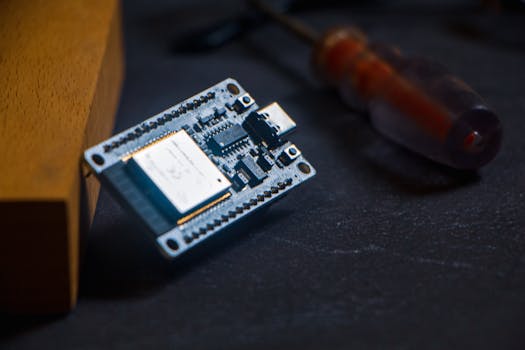
A fundamental requirement for IoT engineers is the ability to develop firmware that runs on resource-constrained devices. Australian employers typically expect proficiency in C and embedded C++, with MicroPython gaining traction for rapid prototyping on ESP32 and Raspberry Pi Pico platforms. Knowledge of low-power design techniques is critical because many IoT deployments in Australia involve remote locations without reliable power sources. For example, agricultural sensors in Western Australia or environmental monitors in the Outback must operate for months on battery power while maintaining reliable data transmission. Experience with energy profiling tools such as Joulescope or Qoitech Otii gives candidates a measurable advantage in interviews.
Network and Communication Protocol Selection
Choosing the appropriate wireless technology for a given use case distinguishes capable IoT engineers from novices. In Australia, the spectrum for LPWAN technologies like LoRaWAN is regulated by the ACMA, and engineers must understand regional frequency allocation (920-928 MHz for LoRa) and transmission power limits. For urban and industrial applications, cellular IoT (Cat-M1 and NB-IoT) is preferred due to existing 4G/5G coverage in metro areas. Engineers should be comfortable evaluating trade-offs between range, data rate, power consumption, and cost. Job advertisements increasingly mention experience with mesh networking protocols such as Zigbee or Thread for smart building applications, and familiarity with the Matter standard is becoming a differentiator in the residential automation segment.
Educational Pathways and Certification Options
The most common educational background for IoT engineers in Australia is a bachelor's degree in electrical engineering, computer science, or mechatronics. However, the field is sufficiently broad that graduates from software engineering, telecommunications, or even physics degrees can transition with targeted upskilling. As of 2026, seven Australian universities offer dedicated Master of IoT programs, including the University of Sydney, RMIT, and Deakin University. These programs typically cover sensor design, cloud architecture, data analytics, and cybersecurity. For professionals already holding a STEM degree, micro-credentials and vendor certifications provide efficient pathways. The AWS Certified IoT Specialty certification appears in 22% of job ads, while the Cisco IoT Essentials and Microsoft Azure IoT Developer certifications are also frequently listed. Practical bootcamps focused on ESP32 development and Home Assistant integrations have emerged in Brisbane and Melbourne, though employers still prioritize formal qualifications for senior roles.
Portfolio and Project Evidence
Australian hiring managers place significant weight on demonstrable project work, often more than academic credentials. A well-documented GitHub repository showing end-to-end IoT projects—from sensor data acquisition to cloud dashboard visualization—can compensate for gaps in formal education. Notable projects that interviewers mention as impressive include a remote monitoring system for beehives (temperature, humidity, weight sensors with LoRaWAN uplink), a predictive maintenance prototype for industrial pumps using vibration analysis and edge inference, or an air quality monitoring network deployed across multiple city blocks. For junior candidates, a capstone project involving an ESP32, DHT22 sensor, MQTT broker, and Grafana dashboard demonstrates fundamental competency in the IoT stack. The key differentiator is evidence of understanding data flow end-to-end, not merely assembling off-the-shelf components.
Salary Expectations and Compensation Trends
Salaries for IoT engineers in Australia have increased by approximately 11% year-over-year since 2023, reflecting sustained demand outpacing supply. According to the 2026 Robert Half Technology Salary Guide, the median total compensation for an IoT engineer with 3-5 years of experience is AUD 125,000, with the interquartile range spanning AUD 110,000 to AUD 145,000. Senior IoT engineers (6+ years) command salaries between AUD 150,000 and AUD 175,000, while principal or lead roles at enterprise organizations exceed AUD 190,000. Contract rates range from AUD 85 to AUD 130 per hour depending on specialization and project complexity. Location remains a significant factor: salaries in Sydney and Melbourne are 10-15% higher than the national median, while opportunities in Perth and Brisbane often include relocation assistance due to mining and resource sector demand. Bonus structures are common, with 45% of permanent IoT roles offering performance-based bonuses averaging 8-12% of base salary.
Hiring Trends and Common Application Mistakes
Based on interviews with recruiting managers at four Australian technology consultancies and two industrial automation firms, three issues frequently undermine otherwise strong applications. First, candidates underestimate the importance of security knowledge. IoT security breaches at an Australian energy retailer in 2024 and a smart building platform provider in 2025 have made cybersecurity a non-negotiable competency for all IoT roles. Second, many applicants focus exclusively on hardware or software, failing to articulate an integrated understanding of how devices, connectivity, cloud services, and analytics layers interact. Third, generic cover letters that do not reference specific Australian regulations (such as the Privacy Act for consumer IoT or AS 62061 for industrial safety) are quickly discarded. The hiring managers also emphasized that domain experience—whether in mining, agriculture, healthcare, or logistics—is highly valued and often compensates for a narrower technical skill set.
Comparison of IoT Engineering with Adjacent Roles
Understanding how IoT engineering differs from similar job titles helps candidates position themselves accurately in the market. A comparison of job descriptions shows that embedded software engineers focus primarily on low-level firmware and often lack cloud connectivity skills. Cloud architects design scalable backend systems but typically do not work with physical hardware constraints. Data engineers specialize in processing large datasets but seldom consider device provisioning or OTA updates. Network engineers understand IP routing and security but rarely program microcontrollers. The IoT engineer role uniquely requires bridging these domains. This breadth explains why employers offer premium salaries for candidates who can independently architect and implement a complete IoT solution. It also means that IoT engineers often work closely with product managers and domain experts to translate business requirements into technical specifications.
Frequently Asked Questions
What is the fastest way to transition into an IoT engineering role in Australia?
For professionals with a background in software development or electrical engineering, the fastest transition typically involves completing one or two vendor certifications (AWS IoT Specialty or Azure IoT Developer) while building a portfolio project that demonstrates end-to-end integration. Joining open-source IoT projects on GitHub and attending meetups of the IoT Alliance Australia provides networking opportunities that lead to referrals. The average transition time reported on professional forums is 6-12 months for dedicated upskilling.
Do I need a university degree to become an IoT engineer in Australia?
While a degree in engineering, computer science, or a related field is commonly listed as a requirement, the industry is experiencing a skills shortage that has led some employers to accept equivalent experience. As of 2026, approximately 15% of job advertisements explicitly state that relevant experience can substitute for formal education. However, for skilled migration visas (such as the 482 or 186 visa), a degree is typically mandatory unless the applicant has exceptional industry recognition.
Which Australian cities have the highest demand for IoT engineers?
Sydney leads in job postings with 32% of all IoT engineer vacancies, driven by its concentration of technology headquarters and smart city initiatives. Melbourne follows with 28%, supported by its strong manufacturing and logistics sectors. Perth accounts for 15% due to mining automation and resource monitoring requirements. Brisbane and Adelaide represent 12% and 8% respectively, with growing focus on agricultural IoT and health technology.
What are the typical career progression steps for an IoT engineer?
Early career (0-3 years): Junior IoT engineer or firmware engineer under supervision. Mid-career (3-6 years): Independent IoT engineer handling full project lifecycles. Senior (6-10 years): Lead IoT architect or technical lead managing cross-functional teams. Beyond 10 years: Principal engineer, IoT practice lead, or head of IoT engineering at enterprise organizations. Some professionals transition into product management or IoT cybersecurity consulting after reaching senior technical levels.
Is the IoT engineering field in Australia affected by economic downturn risks?
According to the 2026 Australian Technology & Digital Workforce Report, IoT engineering roles show above-average resilience to economic cycles because many deployments target operational efficiency gains and cost reduction, which become more valuable during downturns. The mining and agriculture sectors, both large IoT adopters in Australia, tend to maintain or increase technology investment during economic slowdowns to improve productivity. However, speculative IoT startups may face funding constraints, so engineers targeting stable employment should focus on established enterprises rather than early-stage ventures.
Strategic Recommendations for Aspiring IoT Engineers
For individuals committed to entering this field, a structured approach yields the highest probability of success. Begin by auditing current skills against the five competency clusters mentioned earlier, then prioritize the most significant gap. Given market demand, cloud IoT platform expertise is the most transferable skill and the easiest to develop through free tiers on AWS or Azure. Simultaneously, begin a portfolio project that solves a tangible problem relevant to an Australian industry sector. The mining sector, for example, frequently needs real-time vibration monitoring for conveyor belts and crushers, while agriculture requires soil moisture and weather station networks. Engaging with the IoT Alliance Australia and attending the annual IoT Impact conference in Sydney provides exposure to current industry challenges and hiring companies. Finally, because the field evolves rapidly, plan for ongoing education through vendor recertification cycles and academic journals such as IEEE Internet of Things Journal to remain competitive beyond the initial job placement.