So, You Want to Be an Industrial Automation Engineer in Sweden?
Maybe you've been scrolling through job boards in Gothenburg or Stockholm, and every posting for an Industrial Automation Engineer looks like it was written in a secret code. PLC, SCADA, TIA Portal, SPS – what do you actually need to know, and what's just fluff? I've spent time talking to hiring managers and engineers who've made the move, and the landscape in Sweden is pretty specific. Let's cut through the noise and talk about the skills that actually get you hired in 2026.
The Non-Negotiables: Core Technical Skills
PLC Programming – and Not Just Any PLC
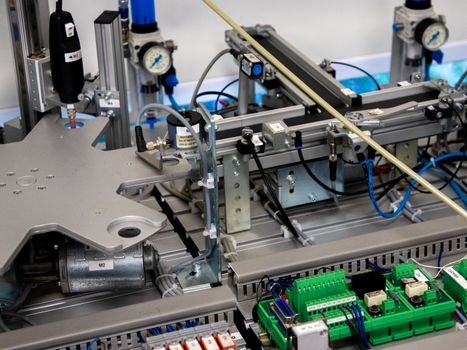
If you can't program a PLC, you're not getting through the door. But here's the nuance: Swedish industry is heavily dominated by Siemens, especially in automotive and manufacturing corridors like Gothenburg (hello, Volvo) and the heavy machinery sector in Örebro. So TIA Portal (Totally Integrated Automation Portal) is basically the king of the hill. You need to be comfortable with Structured Text (ST), Ladder Logic, and Function Block Diagram (FBD) in Siemens environments. While Rockwell (Allen-Bradley) pops up in some pharma and food processing plants, the vast majority of Swedish industrial automation roles demand Siemens S7-1200/1500 experience. If you're coming from a Rockwell-heavy background, expect to spend a few weeks getting cozy with TIA Portal before you apply.
SCADA and HMI – The Interface Matters
Knowing how to build a solid SCADA interface is where you separate yourself from the junior crowd. In Sweden, WinCC (also Siemens) is a massive player, but Ignition by Inductive Automation has been growing fast, especially in smaller to mid-size companies that want flexibility without the Siemens licensing overhead. A piece of advice I hear from locals: don't just know how to drag and drop buttons. Understand how to structure alarming, historian data, and user management. Swedish factories are increasingly obsessed with data collection for lean manufacturing, so if you can show you know how to log production data to SQL databases or integrate with MES (Manufacturing Execution Systems), you're golden.
Industrial Networks – The Glue That Holds It Together
Sweden is a world leader in automated production, which means your shop floor networks better be solid. You'll need hands-on experience with PROFINET (the default for Siemens), but don't sleep on EtherNet/IP or even older Profibus in legacy systems. A surprising number of job ads now also ask for experience with IO-Link and OPC UA, especially if the role involves modernizing older plants. The Swedes love a good retrofit project, so if you can troubleshoot a mixed network with a 1990s Profibus segment and a shiny new OPC UA server, you're in high demand.
Beyond the PLC: The “Nice-to-Haves” That Became Must-Haves
Robot Programming – ABB is Everywhere
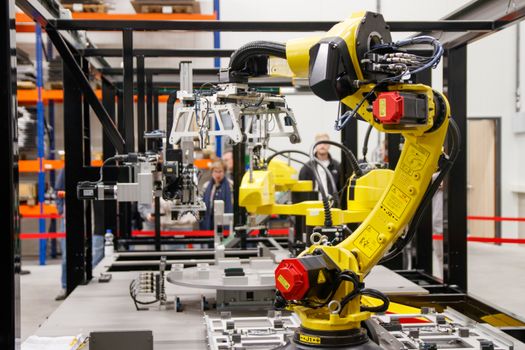
Sweden is home to ABB, and their robots are scattered across factories like salt in a pretzel. Even if the job title doesn't say “robotics,” many automation engineers are expected to at least understand ABB's Rapid programming language or Universal Robots' Polyscope. A typical scenario: you're debugging a conveyor line, and the robot arm stops communicating with the PLC. If you can't read the robot's error log, you're stuck waiting for a specialist. I've heard hiring managers say that a candidate who lists “basic ABB robot troubleshooting” gets a serious edge over someone who only has pure PLC skills.
Safety Systems – It's Not Just About Speed
Swedes take workplace safety incredibly seriously. Understanding functional safety standards like ISO 13849 and IEC 62061 isn't optional – it's embedded in almost every automation role. You'll be expected to wire in safety relays, configure safety PLCs (like Siemens F-series), and understand SIL/PL ratings. One engineer I spoke to in Malmö said that in an interview, they were asked to sketch a simple safety circuit for a press brake. If you can't do that, the interview is probably over.
Soft Skills That Actually Matter in Sweden
English is Fine, but Swedish Opens Doors
Here's the honest truth: you can absolutely get a job as an automation engineer in Sweden speaking only English, especially in multinational companies like Volvo, Scania, or AstraZeneca. But if you want to work for a smaller Swedish-owned company (which is where a lot of the cool, flexible roles are), you'll hit a wall. I've seen job ads specifically say “Swedish is not a requirement” for big firms, but then the team meetings happen in Swedish anyway. Learning basic technical Swedish – like styrteknik (control technology), driftstörning (operational disturbance), elsäkerhet (electrical safety) – will massively expand your options. Plus, Swedes appreciate the effort, and it makes the fika conversations much easier.
Problem-Solving with a Lean Mindset
Sweden is obsessed with Lean and continuous improvement. You don't need a black belt in Six Sigma, but understanding the basics of PDCA, 5S, and value stream mapping makes you look like someone who gets the culture. When you're troubleshooting a jam on a packaging line, being able to suggest a small process tweak that reduces downtime by 10% is the kind of value that gets you remembered.
Real-World Insights from the Swedish Job Market
I've been digging into salary data and hiring trends for 2026. According to recent surveys from the Swedish Association of Graduate Engineers, the median salary for an automation engineer with 3-5 years of experience is around 48,000 SEK per month, but that jumps to 55,000+ SEK if you have proven experience with TIA Portal and safety systems. The biggest hiring crunch right now is in the south of Sweden (Skåne region, around Malmö and Lund), where pharmaceutical and food automation is booming. Companies are struggling to find people who can handle both the legacy systems in older plants and the new Industry 4.0 integration. One common mistake I see: engineers who only know one brand of PLC. If you're a Siemens-only person, you might miss out on gigs at companies like Tetra Pak (which uses a mix) or some of the automotive tier-1 suppliers that run Beckhoff or B&R. Diversification is your friend.
Career Outlook and Market Trends
The push toward green energy and battery production is huge in Sweden. Northvolt in Skellefteå and Västerås is hiring automation engineers like crazy, and they specifically need people who understand process automation in a lithium-ion battery context. This means high demand for knowledge of vacuum systems, cleanroom protocols, and advanced motion control. Meanwhile, the traditional manufacturing sector in the Gnosjö region (the Swedish “Småland” industrial heartland) is desperate for engineers who can retrofit old machines with modern controllers to extend their life. It's not all glamorous new factories – a lot of the work involves making 1980s machines talk to 2026 networks. If you're good at that, you'll never be out of a job.
Sweden vs. Other Markets – A Quick Comparison
Compared to, say, Germany or the US, Swedish automation roles tend to demand a broader skillset. In Germany, you might be a pure Siemens PLC programmer for years. In Sweden, you're more likely to be a generalist: one week you're configuring a VFD, the next you're setting up a vision system, and the week after you're helping the IT team with the OT network. The upside is that you build incredibly varied experience quickly. The downside is that you need to be comfortable with being uncomfortable. If you're the kind of engineer who likes deep specialization, Sweden might feel a bit chaotic.
Frequently Asked Questions
Do I need a university degree to work as an automation engineer in Sweden?
Not strictly, but it helps. A bachelor's in electrical engineering, automation, or mechatronics is the common path. However, I've met excellent engineers who came from vocational programs (YH-utbildning) or military technical backgrounds. The key is demonstrable experience – show your GitHub with PLC code, or bring a portfolio of projects to the interview. Swedes value practical results over paper credentials in many cases.
Is it hard to get a work visa for this role?
Industrial automation is on the shortage occupation list in Sweden, so the visa process is relatively smooth if you have a job offer. The employer typically sponsors the permit. The bigger challenge is finding a rental apartment in cities like Stockholm or Gothenburg – that's a whole other story.
What's the biggest mistake engineers make when applying for these jobs?
Not tailoring the CV to the specific stack. I've seen applications where someone lists “PLC programming” but doesn't mention which brand or software. In Sweden, hiring managers scan for keywords like “TIA Portal,” “S7-1500,” “PROFINET,” and “Ignition.” If those aren't there, the CV goes in the bin. Also, don't exaggerate your Swedish level – they'll test you in the interview.
Are there many remote automation jobs in Sweden?
Rarely full-time. Some companies offer hybrid roles where you're on-site 3-4 days a week and remote 1-2 days for documentation or programming. But commissioning and troubleshooting are inherently hands-on. If you want fully remote, look for roles in software automation (like MES or IIoT platforms) rather than plant-floor automation.
Final Thoughts – Is It Worth It?
Sweden is an amazing place to work as an automation engineer. The work culture is flat, the pay is solid, and the projects are genuinely cutting-edge in many sectors. But you need to come prepared with a specific toolkit: strong Siemens PLC skills, a willingness to learn robot programming, and an openness to handling both old and new technology. If you can do that, and maybe learn a few Swedish phrases for the fika table, you'll find a role that challenges you and pays well. Just make sure to bring your own fika – the kanelbullar at that first meeting might not be as good as you hope.