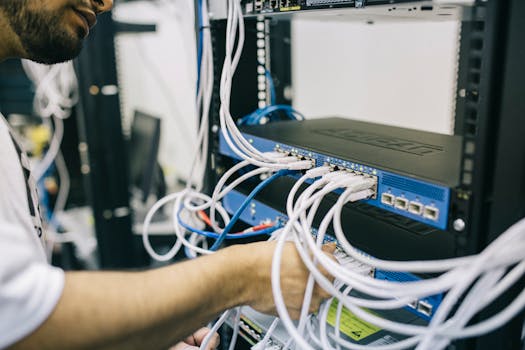

If you're eyeing a network engineer role in the United States, you've probably noticed that job boards are a blur of acronyms—BGP, OSPF, SD-WAN, Python, AWS, CCNP, CCIE. It's easy to feel like you need to master every single protocol and platform just to get an interview. And that anxiety is real, especially when you see postings demanding ten years of experience for what looks like an entry-level job.
But here's the thing: the market is a lot more nuanced than those intimidating job descriptions suggest. Hiring managers aren't looking for a walking encyclopedia; they're looking for someone who can solve problems, keep networks running, and adapt to a rapidly shifting tech landscape. In this article, I'll break down the skills required for network engineer in the United States—what's actually non-negotiable, what you can learn on the job, and how to position yourself for 2026.
The Core Networking Fundamentals (Still Non-Negotiable)
Let's start with the bedrock. You can't skip the fundamentals, no matter how much automation and cloud dominate the conversation. A network engineer without a solid grasp of routing and switching is like a carpenter who doesn't know how to use a hammer. In the US market, recruiters will almost always filter for these core skills, and you'll be expected to speak fluent networking.
- Routing and Switching: This means understanding how data moves across networks. You need to know OSPF, EIGRP, and BGP for routing, and VLANs, STP, and EtherChannel for switching. Real-world troubleshooting often demands you can mentally trace a packet from source to destination and identify where it's getting stuck.
- Network Security: Security isn't a separate role anymore; it's baked into every network decision. You should be comfortable with access control lists (ACLs), firewalls (think Palo Alto, Fortinet), VPNs, and security zones. A 2025 survey by (ISC)² indicated that 68% of organizations consider network security expertise a top priority when hiring network engineers—and that trend is only stronger in 2026.
- Wireless Networking: With the explosion of remote work and IoT devices, wireless networks are more critical than ever. You need to understand Wi-Fi standards (802.11ax, for example), site surveys, and controller-based vs. cloud-managed wireless solutions like Cisco Meraki. It's not just about setting up an access point; it's about capacity planning and interference management.
These aren't just checkboxes for a resume. In interviews, you'll be asked scenario-based questions: “A user can't connect to the internet, what do you check first?” or “How would you redesign this network to support 500 new users?” Your ability to think through these problems logically is as important as the specific commands you know.
Automation and Programmability: The New Must-Have
Here's where a lot of self-taught engineers get nervous. The days of manually configuring every switch port are fading. In the US, automation is no longer a “nice-to-have” for network engineers; it's a core requirement in many job postings. The reason is simple: networks are too large and complex to manage with CLI commands alone. Cloud environments spin up and down in minutes, and if you're still logging into every device one by one, you're going to be left behind.
Scripting Languages: Python is King
Python is the undisputed language for network automation. It's readable, versatile, and has a huge community of network engineers sharing libraries and scripts. You don't need to be a software developer, but you should be comfortable writing scripts to automate mundane tasks—like pushing configuration changes to hundreds of switches or pulling logs for analysis. A simple script that automates a routine task will save you hours every week, and it's a huge selling point in an interview.
NetDevOps and Infrastructure as Code
Taking automation a step further, you should be familiar with tools like Ansible, Terraform, and Git. Ansible is commonly used for configuration management across network devices. Terraform is the go-to for provisioning cloud infrastructure. And Git is how you version-control your network configurations—yes, networks are now “code” in many organizations. If you can show you understand the concept of treating your network config like software, with versioning and rollbacks, you'll instantly stand out from the crowd.
APIs and Network Controllers
Modern networks are often managed via APIs. Cisco DNA Center, for example, offers a REST API that lets you programmatically interact with the network. Similarly, public cloud providers like AWS and Azure have APIs for managing virtual networks. You don't need to be an API expert, but knowing how to read API documentation and make simple calls using Python or Postman is a huge advantage.
Cloud Networking: It's Not Optional, It's Everywhere
If there's one skill that can fast-track your career in the US, it's cloud networking. Over 80% of enterprises now use multi-cloud environments (AWS, Azure, Google Cloud), and they need network engineers who can bridge the gap between on-premises data centers and the cloud. This isn't just about configuring a VPC; it's about designing hybrid networks, integrating SD-WAN, and understanding cloud-native security groups and load balancers.
- AWS Networking: Learn the core networking services: VPC, Subnets, Route Tables, Security Groups, and Network ACLs. AWS also offers advanced services like Transit Gateway and Direct Connect, which are used in larger enterprise architectures. Getting the AWS Advanced Networking Specialty certification (especially if you have a networking background) is a strong signal to employers.
- Azure Networking: Similar to AWS, you'll need to know Virtual Networks (VNets), Network Security Groups (NSGs), and Azure Load Balancers. Many US companies are Microsoft shops, so Azure knowledge is often preferred. The Microsoft Certified: Azure Network Engineer Associate certification is a great start.
- SD-WAN: Software-Defined Wide Area Networking is replacing traditional MPLS. It's a fundamental shift in how WANs are designed, and you'll find that many companies are deploying SD-WAN solutions from Cisco, Palo Alto, or Viptela. Understanding the basics of centralized control, policy-based routing, and secure overlay tunnels is crucial.
I've spoken with hiring managers who say that a candidate with strong fundamentals and cloud experience can outcompete a CCIE with no cloud exposure, purely because the network is moving so rapidly to the cloud. So, even if you're a traditional networking pro, don't sleep on cloud.
Soft Skills That Actually Matter in the US Market
Here's the part that doesn't show up in a skills list but often determines whether you get hired: soft skills. Networking is a cross-functional role. You're working with developers, security teams, and business stakeholders. You have to be able to explain technical issues to non-technical people and translate business requirements into network designs.
- Communication: You'll be writing documentation, presenting design proposals, and participating in incident calls. Clear communication is a differentiator. A study from LinkedIn in 2024 noted that 92% of talent professionals consider soft skills just as important as hard skills, and in engineering roles, communication tops the list.
- Problem-Solving: This seems obvious, but it's about your approach. Do you follow a structured troubleshooting methodology? Can you handle the pressure of a major outage? The ability to stay calm, methodically isolate variables, and resolve issues under stress is something hiring managers look for in the stress test of the interview process.
- Continuous Learning: The tech landscape changes fast. Certifications expire, new tools appear, and security threats evolve. Being someone who genuinely enjoys learning (and can demonstrate that through personal projects, blog posts, or GitHub repos) is a huge plus.
Certifications: Still Worth It, But Choose Wisely
Certifications are a common way to validate your skills, but they're not all created equal. In the US, the Cisco Certified Network Associate (CCNA) is still the gold standard for entry-level network engineering. It covers a broad base of knowledge and is widely recognized. If you're aiming for a more senior role, the CCNP or CCIE can open doors, but they require deep, hands-on experience and are a serious time commitment.
Cloud certifications from AWS, Azure, or Google are gaining traction, especially for roles that focus on hybrid or cloud-native networking. For example, the AWS Certified Advanced Networking – Specialty is a tough exam but highly respected. On the security side, the CompTIA Network+ is still relevant for foundational roles, while the Certified Information Systems Security Professional (CISSP) might be overkill unless you're chasing a security-focused network architect role.
Here's my insider advice: don't collect certifications like Pokémon cards. Instead, pick one or two that align with your career goals and the job market in your area. If you're in a major tech hub like San Francisco or New York, cloud and automation certifications will serve you well. If you're in a region with more traditional enterprise networks, Cisco certs might be more valuable. Also, remember that certs get you past HR, but they don't guarantee you can do the job—so always prepare for technical interviews.
Market Outlook for Network Engineers in 2026
So, what's the job market like? The Bureau of Labor Statistics (BLS) projects that network and computer systems administrator jobs (the closest match to network engineering) will grow by 3% from 2023 to 2033, which is slower than the average for all occupations. But that's just the title. The real growth is in network architecture and cloud infrastructure. For example, the BLS predicts a 13% growth for network and computer systems architects during the same period. That's a big difference.
Salaries are still attractive. According to data from Glassdoor and Payscale, the average base salary for a network engineer in the US is around $90,000 to $110,000 per year, with senior engineers and those with cloud or security specializations earning well above $130,000. In major cities like New York and San Francisco, total compensation can reach $150,000+. The key to capturing these numbers is staying current with automation and cloud skills.
Remote work has also changed the game. While on-site roles still exist (especially for data center work), many network engineer positions are now hybrid or fully remote. This expands your job search beyond your immediate area. However, there's a catch: remote roles tend to have more competition. To stand out, you need a strong online presence (like a GitHub portfolio of automation scripts) and a proven ability to work independently.
How to Stand Out in a Crowded Field
The competition is real, but you can differentiate yourself with a few strategic moves.
- Build a Home Lab or Use Cloud Simulations: Nothing beats hands-on experience. Spin up a virtual lab with Cisco VIRL or EVE-NG, or use free tiers from AWS and Azure to practice cloud networking. Break things, fix them, and document what you learned.
- Follow Industry Thought Leaders: Podcasts like Packet Pushers, blogs like Network Chuck, and communities like Reddit's r/networking are goldmines for staying current. Participate, ask questions, and learn from the veterans.
- Tailor Your Resume to the Job: Don't just list every skill under the sun. Read the job description and use the exact keywords. If they're asking for BGP, Ansible, and AWS, make sure those are visible in your resume's summary and experience bullets.
- Network (the human kind): Attend local meetups or webinars. In the US, networking is a relationship-based field. Often, jobs are filled through referrals before they're even posted. So, put yourself out there.
Consider the Hybrid Cloud Specialist Route
If you're looking for a niche that's less saturated, consider becoming a hybrid cloud network specialist. Many companies are struggling to connect their on-premises data centers with multiple clouds. They need engineers who can design and manage a seamless network across these environments. This role requires deep knowledge of MPLS or SD-WAN, cloud VPCs, and DIA (Direct Internet Access). It's a challenging skill set, but it's in high demand and often commands a premium salary. For example, a hybrid network engineer who understands both Cisco DNA and AWS Direct Connect might earn 10-15% more than a traditional network engineer.
Frequently Asked Questions
What programming languages should I learn for network automation?
Python is the clear winner. It's used for automation scripts, network monitoring tools, and even SDN controllers. After Python, learning basic Bash or Go can be beneficial, but Python is your best investment.
Do I need a degree to become a network engineer in the US?
Not necessarily. Many successful network engineers are self-taught or have an associate's degree. However, a bachelor's degree in computer science, information technology, or a related field can help you get past HR filters, especially in large corporations. What's more important is your hands-on experience, certifications, and problem-solving ability.
Is the Cisco CCIE still valuable in 2026?
Yes, but it's no longer the ultimate golden ticket. The CCIE is still a respected and rigorous certification, but many organizations now value automation and cloud skills alongside deep routing and switching knowledge. A CCIE with automation skills is a rare and highly sought-after combination.
How can I start transitioning from a traditional network engineer to a cloud-focused role?
Start by getting one cloud certification (like AWS Solutions Architect Associate). Build a small project, such as a two-tier application on AWS with a VPC, security groups, and an ALB. Once you've done that, apply for roles that list “hybrid” or “multi-cloud” as keywords. The transition is easier than you think because your networking fundamentals are directly transferable.
Final Thoughts: The Blend Wins
The skills required for network engineer in the United States today are a blend of old-school networking fundamentals and new-school automation and cloud expertise. You don't need to know everything overnight, but you need a roadmap. Start by strengthening your core routing and switching skills. Then, add automation with Python. Finally, branch into cloud networking. That combination, along with solid communication and problem-solving skills, will make you a compelling candidate in 2026. The fear you might feel about keeping up is normal, but it's also a motivator. The network engineering field is always evolving, and that's what keeps it exciting. So, get your hands dirty, stay curious, and you'll find your place in this dynamic industry.