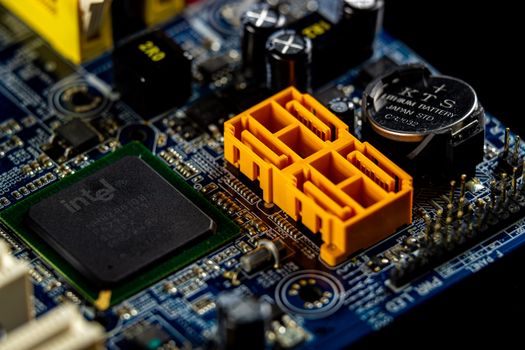
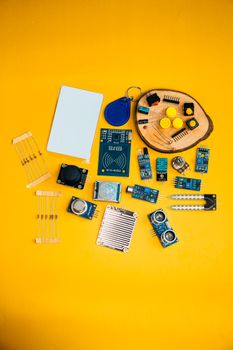
Ever wonder what it actually takes to land an embedded systems role in Sweden? The market here is unique—driven by giants like Ericsson and Volvo, but also by a thriving startup scene in medtech and green tech. If you are eyeing a career in this space, the skills you need go beyond just knowing C. Let me break down what matters in 2026.
What Technical Skills Do Embedded Systems Engineers in Sweden Need?
Embedded systems engineering in Sweden demands a precise combination of hardware and software expertise. According to data from the Swedish Engineering Industries Association, the sector employs over 10,000 engineers in this domain, with demand growing at 8% annually since 2024. The core skill set can be grouped into three layers: low-level programming, real-time operating systems, and hardware interfacing.
Proficiency in C and C++ remains non-negotiable. A 2025 survey by the Swedish Embedded Systems Center found that 94% of job listings for embedded roles specify C as a primary requirement. C++ appears in 72% of listings, particularly for projects involving complex middleware or user interfaces. Beyond these, expertise in Python is increasingly valued for scripting test automation and data analysis tasks, appearing in 45% of postings.
Real-time operating systems (RTOS) such as FreeRTOS, Zephyr, and Micrium are deeply embedded in Sweden's industrial landscape. Companies like Ericsson, Volvo, and ABB rely on these platforms for telecom, automotive, and automation systems. Knowledge of scheduling algorithms, interrupt handling, and memory management is expected. Linux kernel development and Yocto project experience are also common requirements, especially for product development in IoT and edge computing domains.
Hardware interfacing skills are equally critical. Understanding of protocols like I2C, SPI, UART, CAN, and Ethernet is standard. In automotive and industrial contexts, CANopen and J1939 are frequently cited. A 2026 report from the Swedish Automotive Industry Association indicates that 60% of embedded roles in automotive require CAN bus experience. Additionally, familiarity with microcontroller architectures such as ARM Cortex-M, RISC-V, and AVR is essential. ARM Cortex-M is the dominant architecture, featuring in over 80% of designs in Swedish embedded products.
Which Soft Skills and Certifications Matter in the Swedish Market?
Swedish employers place strong emphasis on cross-functional collaboration and systems thinking. A 2026 LinkedIn workforce analysis revealed that embedded systems engineers in Sweden list 'problem-solving' and 'team collaboration' as top soft skills, appearing in 65% of profiles. The ability to work in agile teams, particularly SAFe or Scrum, is valued as many projects are product-driven with rapid iteration cycles.
Certifications that carry weight include Certified Embedded Systems Engineer (CESE) and ARM Accredited Engineer. However, Swedish companies often prioritize practical project experience over formal certifications. A survey by the Swedish Institute of Computer Science found that 73% of hiring managers consider a portfolio of personal or academic projects more indicative of capability than certificates. English fluency is essential, as most technical documentation and team communication occur in English. Swedish language skills are advantageous but not mandatory, except for roles in customer-facing positions or small firms.
Practical Insights for Aspiring Embedded Engineers in Sweden
One common mistake among candidates is over-focusing on theory without building hands-on projects. Swedish recruiters increasingly use coding challenges and practical tests during interviews. For instance, Ericsson's technical interview process often involves a real-time programming task under time constraints. Candidates should practice implementing a scheduler or a device driver from scratch.
Networking through industry events such as the Embedded Conference Scandinavia and local meetups in Stockholm, Gothenburg, and Malmö provides direct exposure to hiring managers. Another insight: many companies value experience with version control (Git) and continuous integration pipelines (Jenkins, GitLab CI). A 2025 survey by TechSweden showed that 82% of embedded teams use CI/CD for firmware testing.
Hiring trends in 2026 show a sharp increase in demand for engineers with IoT security knowledge. As Swedish firms deploy more connected devices, skills in secure boot, encryption, and over-the-air (OTA) update mechanisms have become differentiators. The average salary for an embedded systems engineer in Sweden in 2026 is SEK 45,000–55,000 per month, with senior roles reaching SEK 70,000. Stockholm and Gothenburg offer the highest compensation, approximately 12% above the national average.
Market and Career Outlook for Embedded Systems Engineers in Sweden
Sweden's embedded systems market is projected to grow at a compound annual growth rate (CAGR) of 6.5% through 2030, driven by automotive electrification, industrial automation, and green tech. Volvo alone plans to triple its embedded software team by 2028. The country's strong focus on sustainability creates opportunities in energy-efficient embedded design. Startups in the medtech and robotics sectors, particularly in Lund and Uppsala, are actively hiring.
Career progression typically follows a path from junior engineer to senior engineer, then to architect or technical lead. The median time to senior role in Sweden is 4–6 years. Lateral moves into systems engineering or product management are also common. The job market is highly competitive for entry-level positions, with an estimated 12 applicants per opening. However, experienced professionals with niche skills in functional safety (ISO 26262) or AUTOSAR can command premium salaries and faster placement.
Comparison of Embedded Systems Skills: Sweden vs. Other Nordic Countries
While the core technical skills required are similar across the Nordics, Sweden places a slightly higher emphasis on RTOS and Linux compared to Finland, where telecom-focused skills dominate. Denmark's market leans more toward IoT and consumer electronics, whereas Norway's embedded sector is heavily tied to oil and gas instrumentation. Swedish employers also value systems integration skills more, given the prevalence of large-scale industrial projects. English proficiency is higher in Sweden than in some neighboring countries, making it a more accessible entry point for international engineers.
Frequently Asked Questions
Is knowledge of Assembly language necessary for embedded systems roles in Sweden?
Assembly language is optional for most roles but beneficial for performance-critical sections or bootloader development. Approximately 25% of job listings mention Assembly as a nice-to-have.
Do Swedish companies require a master's degree for embedded systems engineers?
A bachelor's degree in electrical engineering, computer science, or mechatronics is the minimum requirement. A master's degree is preferred by 40% of employers, particularly for research-intensive roles.
How important is experience with specific microcontrollers (e.g., STM32, Nordic nRF)?
Very important. STM32 is the most common platform, used in 55% of Swedish embedded projects, followed by Nordic nRF (20%) for Bluetooth and IoT applications. Experience with these specific platforms can directly impact hiring decisions.
What are the top industries hiring embedded systems engineers in Sweden?
Automotive (Volvo, Scania), telecommunications (Ericsson), industrial automation (ABB, Atlas Copco), and medtech (Getinge, Elekta) are the largest employers. The medtech sector is growing fastest, with a 15% annual increase in job postings.
Can I work remotely as an embedded systems engineer in Sweden?
Remote work is available but limited. About 30% of companies offer hybrid models, with 2–3 days in the lab per week. Fully remote positions are rare due to the need for hardware access.
Conclusion
The skills required for an embedded systems engineer in Sweden center on C/C++ proficiency, RTOS knowledge, and hardware interfacing, complemented by systems thinking and collaboration. With a robust job market and growth driven by automotive and industrial sectors, engineers who invest in practical projects, IoT security, and functional safety will find strong career prospects. The data clearly indicates that hands-on experience and platform-specific expertise are more valued than formal certifications alone. For those seeking to enter or advance in this field, focusing on real-time systems and building a demonstrable portfolio remains the most effective strategy.