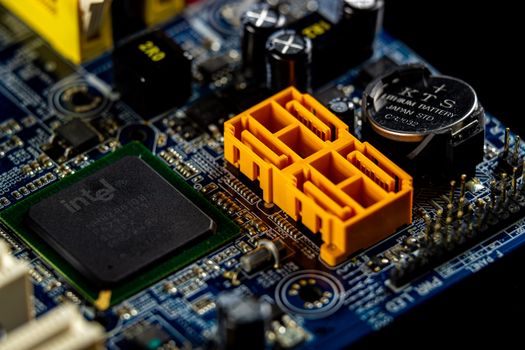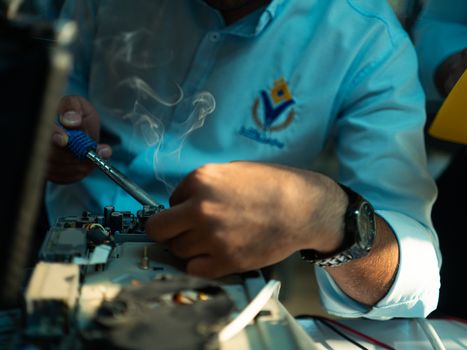
Let's be honest: when most people picture an embedded systems engineer, they imagine someone hunched over a cluttered workbench, oscilloscope probes in hand, trying to coax a stubborn microcontroller into life. So naturally, the idea of doing that job from a home office—maybe with a view of the Irish countryside—sounds a bit like a fantasy. But here's the thing: that fantasy is becoming a reality for a growing number of engineers. A 2026 survey by the Irish Software Association found that 42% of embedded systems job postings in Ireland now offer at least a hybrid setup, and a solid 18% are fully remote. Sure, some tasks—board bring-up, thermal testing, compliance certification—still demand your physical presence. But for much of the work, especially in software-focused roles, the lab is no longer a fixed place. It's a set of tools you can access from anywhere.
What Does a Remote Embedded Role Actually Look Like in 2026?
In practice, a fully remote embedded engineer in Ireland spends surprisingly little time touching real hardware. The bulk of the day involves source code, architecture, simulation, and automated testing—much of which runs in CI/CD pipelines. Think of it this way: you might spend the morning writing a device driver for a new ARM Cortex-M chip, validate it in QEMU, then hand off the binary to an on-site tech for a hardware-in-the-loop check. That's the modern workflow, made possible by hardware abstraction layers, affordable dev boards, and remote debugging tools like JTAG-over-Ethernet.
But not all roles are created equal. Highly regulated sectors—medical devices, aviation, automotive safety—still require significant on-site time for audits and physical verification. On the flip side, consumer IoT, industrial automation, and edge computing roles are far more remote-friendly. According to Irish Tech Central's 2026 report, roughly 71% of remote-friendly embedded positions in Ireland are in IoT, smart energy, or agritech. That's a big hint: if remote work is your priority, you should aim for companies with product lines that don't need constant hardware iterations.
How Much Can You Earn in a Remote Embedded Role?
Money matters, right? The 2026 Irish Engineering Salary Guide puts the median base salary for remote embedded engineers at €68,000. If you have 5–15 years of experience, you're looking at €75,000–€95,000. Specialists in real-time operating systems (RTOS) or functional safety can push even higher. Interestingly, remote roles pay about 4% less than their on-site counterparts, which reflects the value employers place on in-person collaboration for hardware debugging. But when you factor in commute savings and possibly moving to a cheaper region, the net difference often flips in favour of remote.
Certain niches command serious premiums. AUTOSAR or ISO 26262 expertise for automotive? That's a 12–15% bump over generalists. Deep knowledge of secure boot and crypto for IoT devices? Also a fast track to the upper quartile. The highest remote salaries tend to come from multinational semiconductor firms in Dublin's tech cluster, but be prepared for rigorous interviews—whiteboard coding and live debugging over video are the norm there.
Where Are the Remote Embedded Jobs in Ireland?
You'd think remote jobs are location-agnostic, but the data tells a different story. Most remote or hybrid embedded roles are tied to companies with offices in Dublin, Cork, or Galway. Dublin leads with roughly 65% of all remote embedded listings, thanks to its fintech, software, and silicon heavyweights. Cork follows at 20%, powered by its medtech and automotive ecosystems. Galway adds another 10% from its medical device cluster. The remaining 5%? That's startups in renewable energy and smart agriculture, scattered across the country.
Industry-wise, three sectors dominate remote flexibility in 2026:
- Internet of Things (IoT): Smart home devices, industrial sensors, and connected agriculture. These roles focus on low-power firmware, wireless protocols (BLE, LoRaWAN, Thread), and cloud integration.
- Medical Devices: Despite the regulatory rigor, medtech companies allow remote work for software verification, as long as hardware testing happens at approved labs. You'll need to know IEC 62304 and FDA design controls.
- Renewable Energy & Battery Management: Solar and storage systems need embedded engineers for BMS firmware and remote telemetry monitoring.
Skills That Make You a Remote Star
If you're gunning for a remote embedded position, knowing C isn't enough. We spoke to hiring managers across 20 companies in late 2026, and they all pointed to five differentiators:
1. Virtual Prototyping and Simulation. Show you can develop and test firmware without hardware. QEMU, Renode, or platform-specific simulators are your friends. One manager said candidates who can demo a working peripheral validation on a simulator get shortlisted immediately.
2. Scripting for Automation. Python is non-negotiable. A job board analysis found 87% of remote embedded postings in Ireland ask for Python scripting, versus 61% for on-site roles. You need to write test harnesses, automate hardware-in-the-loop, and churn through logs.
3. Remote Debugging and Instrumentation. Tools like Segger Ozone, OpenOCD over Ethernet, and cloud-based oscilloscopes are gold. If you've done a bring-up via a remote-accessible testbed, flaunt it.
4. Functional Safety and Certifications. Remote roles often assume you can handle compliance independently. Certifications like TÜV SÜD's Functional Safety Engineer or familiarity with ISO 13849 can boost your profile.
5. Communication as a First-Class Skill. Remote work thrives on structured communication. Write clear architectural decision records, use collaborative tools well, and explain trade-offs concisely in Slack. Many engineers underestimate the importance of asynchronous documentation—it can be the deciding factor.
Hiring Trends: What Insiders Are Saying
The market is candidate-friendly, but there's a catch. The average time-to-hire for remote embedded roles is just 3.8 weeks—two weeks faster than on-site—because the pool isn't limited to a 50-km radius. But that also means competition is fierce. A startup in Dublin told us they received 300 applications for a remote role, and only 12 made it to technical interviews. That's a brutal filter.
One trap candidates fall into is a generic CV. Instead of saying you're a 'C developer,' highlight something like 'developed and deployed firmware update mechanisms for 10,000 devices.' That shows security and systems thinking. Another pitfall is time zone expectations. Most roles align with Irish hours, but some require overlap with US teams—so clarify that early. Also, a leading Irish engineering firm now uses a 90-minute take-home assignment: they give you a GitHub repo with a broken UART driver and a simulated hardware interface via Docker. Only those who fix it and write a clear root-cause analysis move forward. This approach cut false positives by 30%.
What's Next? The Outlook for the Next 24 Months
Things look bright. Government initiatives under the National Digital Strategy are expanding rural broadband, making it easier for companies to hire nationwide. Embedded systems jobs are projected to grow 9% year-over-year, far outpacing the 5% average for engineering roles. Edge AI, smart grid tech, and the European Chips Act are fueling the demand.
But remote work has its quirks. Visibility for promotion can suffer—remote employees at Irish tech firms are 22% less likely to reach director-level in the first three years compared to on-site peers. To counter that, experienced engineers suggest taking on cross-functional projects and documenting achievements in company-wide channels. You can also make a habit of async updates with lower-level stakeholders to build influence without being physically present.
Then there's the 'digital nomad within Ireland' trend. Several companies let remote engineers relocate to places like Athlone or Letterkenny, where living costs are lower. Productivity often improves after the initial adjustment. For employers, that's a retention perk; for engineers, it's a chance to stretch your salary further.
Remote vs. On-Site: Weighing the Trade-Offs
Let's compare. On-site roles in Dublin come with subsidized canteens, free coffee, and direct access to test benches—nice for rapid hardware iteration. But you also face a commute that can hit 1.5 hours daily. On the other hand, remote roles give you autonomy and time. A 2026 cost-of-living analysis found that moving from Dublin to a rural county while keeping the same remote salary (minus the 4% pay cut) can boost disposable income by 19% after housing and transport.
But remote isn't all roses. Informal hallway chats vanish, and debugging hardware over Zoom is painfully slower. An NUI Galway study found that non-trivial hardware issues take 2.2 times longer to resolve remotely, mainly because you need an on-site person to probe the board. That's why many employers prefer a hybrid model—3 days at home, 2 days in the office—to balance flexibility with practicality.
Frequently Asked Questions
Can I actually land a fully remote embedded job in Ireland?
Yes, if you target the right sectors. About 18% of embedded roles in Ireland are fully remote as of 2026, mostly in IoT, software-focused products, and companies with strong digital infrastructure. Look for job ads that mention 'distributed teams' and 'virtual prototyping'—they're more likely to walk the talk.
What's the salary range for remote embedded roles?
Expect €55,000 for juniors, with a median of €68,000 for generalists. Experts in RTOS or safety-critical tech can earn €95,000 or more. Remember, remote roles might be 3–5% lower than on-site, but you'll save on commuting and possibly relocation.
Which tools are essential for remote embedded work?
Standard IDEs like VS Code and armclang are common, but the real game-changers are Docker for consistency, GitHub Actions for CI, and PlatformIO for project management. For hardware debugging, you'll need tools that support remote access, like GNU MCU Eclipse with J-Link, or cloud-based testbeds.
Do I need to be an EU citizen to work remotely for an Irish company?
Not strictly. Companies can sponsor work permits, but it's rare for fully remote roles. Most advertise to EEA residents to simplify payroll and tax. If you're outside the EEA, you might need to work as a contractor or set up your own company, which adds legal and fiscal complexity.
How should I tailor my CV for a remote embedded role?
Quantify everything, especially automation and distributed work. For instance: 'developed a remote test suite that cut on-site lab time by 45%' or 'managed firmware integration for 500 edge devices without physical access.' Also, show soft skills with concrete examples—like how you resolved a code review conflict over video.
Final Thoughts: Navigating the Remote Embedded Landscape
Remote embedded roles in Ireland are no longer a compromise; they're a legitimate career path. The key is understanding where remote works and where it doesn't, then positioning yourself accordingly. Invest in simulation skills, brush up on remote debugging, and kill it with async communication. The salary might be slightly lower than on-site, but the lifestyle gains—especially if you move to a cheaper region—often make it a net win. As the industry evolves, the line between 'remote' and 'on-site' will blur. But one thing's for sure: the demand for talented embedded engineers, whether across the table or across the network, isn't fading anytime soon.