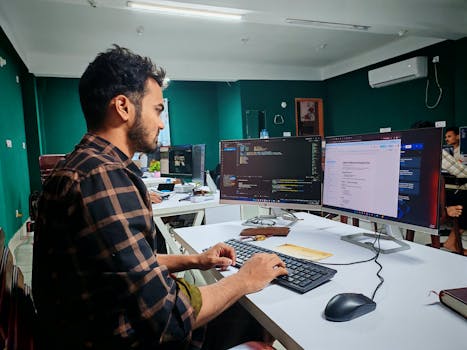

So you're thinking about making the leap to Germany as a software engineer? You're not alone. Every year, thousands of developers from all over the world set their sights on Berlin, Munich, or Hamburg, drawn by the promise of high salaries, job security, and a life where work doesn't swallow everything else. But here's the thing: getting a job in Germany is not the same as in the US or the UK. There are visa rules to untangle, a job market that values pragmatism, and a cultural approach that might surprise you. That's why I've put together this practical, step-by-step roadmap to help you navigate the process—based on how things actually work in 2026.
Why Germany Is a Magnet for Software Engineers
Let's start with the obvious: Germany is Europe's largest economy and a genuine tech powerhouse. The demand for skilled software engineers isn't just high—it's critical. According to the German Economic Institute, over 149,000 IT job vacancies remained unfilled in early 2026. That's a massive gap, and it means opportunities are everywhere, from startups in Berlin to automotive giants in Stuttgart. But before you get excited, you need to understand that the path to becoming a software engineer here is a bit different from what you might expect. You'll need to navigate specific visa rules, language expectations, and a hiring culture that values precision.
Step 1: Meet the Basic Requirements
Before you start sending out applications, let's make sure you meet the formal prerequisites. These aren't overly strict, but they do shape your options.
Educational Background
Most German employers ask for a bachelor's degree in computer science or a related field—but here's the thing: it's not always a deal-breaker. If you have a strong portfolio and several years of professional experience, many companies, especially startups, will happily hire you. In fact, a 2025 Stack Overflow survey found that while 67% of professional developers in Germany hold at least a bachelor's, self-taught developers are becoming more common. So if you're self-taught, don't rule yourself out.
Recognition of Foreign Qualifications
If your degree is from outside the EU, you might need to have it formally recognized by German authorities. They use the Anabin database to check whether your university is recognized. For most IT jobs, this recognition isn't mandatory—employers care more about your skills. However, for visa applications, especially for the EU Blue Card, it can be essential. I’d recommend checking your specific situation on the official Make it in Germany portal. It's a lifesaver.
Language Skills
Here's a reality check: English is the working language in many international tech companies, especially in Berlin and Munich. You can absolutely get by with English alone in these environments. But if you want more doors to open—especially in mid-sized companies or in traditional industries like automotive—you need some German. A B1 or B2 level is often the soft requirement for jobs outside the startup bubble. Even basic A1/A2 German helps with daily life, bureaucracy, and making local friends. Trust me, your integration will be much smoother.
Step 2: Choose the Right Path to Enter Germany
Now that you know the baseline, let's talk about how you actually get into Germany legally. Depending on your nationality, experience, and whether you have a job offer yet, you have several routes. And no, they're not all the same stress level.
EU Blue Card
This is the golden ticket for many non-EU engineers. You need a university degree and a job offer with a salary above a certain threshold. In 2026, the minimum gross salary for IT professionals is €46,800 per year (about €3,900 a month). But there's a catch: if you're an experienced pro without a degree, you can still qualify—as long as you have at least three years of professional experience in the last seven years. That's a game changer for self-taught developers.
German Work Visa (Section 18a/18b)
If your salary doesn't quite hit the Blue Card threshold, or your qualifications don't match exactly, you can apply for a regular work visa. This requires a concrete job offer and approval from the Federal Employment Agency. It's a bit more bureaucratic, but it's a fallback that works.
Job Seeker Visa
What if you want to search for a job while already in Germany? You can apply for a six-month job seeker visa. This is perfect if you want to attend interviews in person and get a feel for the cities. You need a recognized degree and proof that you can support yourself financially. Once you land a job, you switch to a work visa.
Chancenkarte (Opportunity Card)
Introduced in 2024, the Chancenkarte is a point-based system that allows non-EU citizens to come to Germany for one year without a job offer. Points are awarded for qualifications, work experience, language skills, and age. It's a brilliant option for those who want to explore the market firsthand and maybe even improve their German before committing to a job. I've seen people use this as a launchpad.
Step 3: Build the Right Skill Set
Your technical skills are your currency. German employers are pragmatic—they want to see that you can solve real problems, not just discuss theory. So, what should you focus on?
Core Technical Skills
- Programming languages: Java, Python, JavaScript (TypeScript), and C# are the most in-demand. Kotlin and Swift are gaining ground for mobile development.
- Frameworks and libraries: For frontend, you'll see React, Angular, or Vue.js. For backend, it's often Spring Boot, Django, or Node.js.
- Databases: SQL (PostgreSQL, MySQL) and NoSQL (MongoDB, Cassandra) are staples.
- DevOps tools: Docker, Kubernetes, CI/CD pipelines (GitLab, Jenkins), and cloud platforms (AWS, Azure, GCP) are increasingly expected.
- Testing and QA: Knowing how to write unit tests and understand TDD is a huge plus—many companies won't hire without it.
Soft Skills
- Communication: You'll be working in cross-functional teams, so clear and concise communication is key.
- Problem-solving: German companies love engineers who break down complex issues into manageable tasks.
- Collaboration: Experience with agile methodologies (Scrum, Kanban) is almost a given.
- Adaptability: Tech changes fast, and they value engineers who can learn new tools quickly.
Portfolio and GitHub
Employers will definitely look at your code. Maintain a clean GitHub profile with several well-documented projects. If you have open-source contributions, mention them—German engineering culture appreciates that. A personal website or blog can set you apart, especially if you're self-taught. It shows you're genuinely passionate, not just chasing a paycheck.
Step 4: Understand the Job Market and Salary Expectations
Money matters, right? Let's talk about what you can expect to earn. Software engineering salaries in Germany are competitive but lower than Silicon Valley—no surprise there. But the trade-off is lower living costs in many cities, excellent benefits, and a strong safety net.
Salary by Experience Level
- Junior (0-2 years): €45,000 – €55,000 per year
- Mid-level (3-5 years): €55,000 – €70,000 per year
- Senior (5+ years): €70,000 – €90,000+ per year
- Lead/Principal (8+ years): €90,000 – €120,000 per year
Bonuses and stock options can add 10-20% in large tech firms, especially if you land a job at a US multinational.
Highest-Paying Cities
Munich, Frankfurt, and Berlin top the salary charts, but Munich has a higher cost of living. Berlin is the startup hub, offering slightly lower salaries but more stock options and a buzzing tech scene. Stuttgart and Hamburg are strong for automotive and logistics tech.
Tech Stack Demand
Backend development with Java or Python is the most in-demand category right now. But the fastest-growing fields in 2026 are cloud-native development, AI/ML, and cybersecurity. Automotive giants like BMW, Volkswagen, and Bosch are pouring money into software-defined vehicles—so if you have those skills, you're in high demand.
Step 5: How to Find a Job as an International Applicant
Your job search strategy needs to be proactive and targeted. Don't just send out hundreds of applications and hope for the best—that rarely works. Instead, be smart about where you focus.
Where to Look
- Online job boards: LinkedIn, Indeed, StepStone, and Xing (the German LinkedIn) are your go-tos. Follow German tech companies directly and set up job alerts.
- Startup-specific boards: AngelList, Honeypot.io (where companies approach you), and Ottonova are great places to start.
- Company websites: Apply directly on corporate career pages. Many international companies have English-language application processes.
- Recruiters: Specialized IT recruiters like Hays, Robert Half, and Michael Page can work wonders. They often have unadvertised roles and know the market inside out.
Application Documents
In Germany, your CV (Lebenslauf) and a cover letter (Anschreiben) are standard. Your CV should be 1-2 pages, in English or German (depending on the job ad), and include a professional photo (optional but common), a summary, work experience, education, skills, and language proficiency. Be precise about your tech stack and quantify your achievements—avoid vague phrases like "responsible for development" and instead say "led a team of 3 to build a microservices architecture that cut deployment time by 40%."
Your cover letter should explain why you want to work in Germany and why you're interested in that specific company. Avoid generic templates—personalize it for each application. It takes time, but trust me, it pays off.
Networking Is Not Optional
Networking is huge in Germany. Attend tech meetups and conferences, even if they're virtual. Join LinkedIn groups for German tech, and try to connect with current employees at your target companies. Referrals can significantly increase your chances of getting an interview. I've seen candidates get interviews just because they had a mutual connection who vouched for them.
Step 6: The Interview Process
Interview expectations in Germany might differ from what you're used to. The process is often structured and can take anywhere from three to six weeks, which feels like an eternity when you're waiting.
Interview Stages
- HR screening: A short call to discuss your experience and salary expectations. They want to check if you're a good fit before wasting anyone's time.
- Technical interview: This might include a live coding challenge (often on your own laptop), algorithm questions, or a take-home project. Expect questions on system design, data structures, and your past projects. Some companies, especially bigger ones, focus a lot on algorithms and data structures—so brush up on those.
- Cultural fit: A conversation with your future team to see if you'd work well together. They want to know you're not just a code monkey but someone they can collaborate with.
Common Mistakes to Avoid
- Underestimating the Germany's pragmatism: They care about how you solve real-world problems, not theoretical puzzles. So focus on practical solutions you've implemented.
- Not preparing questions: Always have questions ready. Ask about the team's current challenges, code review process, and agile maturity. It shows you're genuinely interested.
- Ignoring the language: Even in English-speaking teams, making an effort to learn German is viewed positively. It shows you're serious about staying long-term.
- Negotiating too hard: German salaries are pretty standardized by industry and experience. Check Glassdoor and Levels.fyi to know your worth, but be prepared to accept the standard range. You can negotiate on other things like holiday days or training budget.
Step 7: Visa, Relocation, and Practicalities
So you've got a job offer—congratulations! Now comes the less glamorous but essential part: getting your paperwork in order and actually moving.
Visa Application
As a non-EU citizen, you need a visa. Your employer usually helps with this process, which is a relief. They'll send you a contract and a formal declaration, which you then take to the German embassy or consulate in your home country. Processing times vary from 4 to 12 weeks, so apply as early as possible. Sometimes, your employer can fast-track the process if the visa is for a shortage occupation, which software engineering definitely is.
Relocation Nuts and Bolts
- Housing: Finding a place to live in cities like Munich or Berlin is like winning the lottery. Start your search early via WG-Gesucht, ImmobilienScout24, or temporary housing services. Many expats start with a short-term furnished apartment while they search for something more permanent.
- Banking: You'll need a German bank account for salary payments. N26 or DKB are online banks that are expat-friendly and can be set up easily.
- Health insurance: Germany has mandatory health insurance. Your employer registers you with a public insurer (like TK, AOK, or Barmer) or a private one if you meet the criteria. It's a deductible from your salary, but it gives you excellent coverage.
- Tax registration: You must register your address at the local Bürgeramt (registration office). You'll receive a tax ID, which your employer needs. Don't forget this step—it's easy to overlook but essential.
Learning German for the Long Haul
If you plan to stay long-term, I strongly advise enrolling in a German course. Many employers offer free language classes, and you should take advantage of that. Not only does it make daily life easier, but it also opens doors for promotions and deeper integration into society. I've met engineers who stayed for years without learning German, but they always hit a ceiling.
Career Outlook and Growth in Germany
The software engineering market in Germany isn't just stable—it's expanding. The government is investing billions to digitize its public administration, and the automotive industry is shifting to electric and autonomous vehicles, creating a massive need for software talent. According to Bitkom, Germany's digital association, the IT sector grew by 5% in 2025 and is expected to grow another 4-6% in 2026. The number of employed IT specialists hit 1.4 million in 2025. That's a lot of opportunity across the board, from automotive to fintech and e-commerce.
Comparison: Germany vs. Other Popular Tech Hubs
How does Germany stack up against tech hubs in the US, UK, and Canada? Let's break it down.
- Salary: US salaries are higher on average, but German salaries come with lower health insurance costs and excellent job security. You won't get million-dollar paychecks, but you'll also avoid the risk of being laid off without warning.
- Work-life balance: Germany has strict labor laws. The average workweek is 40 hours, and overtime is often compensated with time off or extra pay. Paid leave is at least 24 days, but most companies offer 30. You'll have time to actually enjoy life.
- Career progression: German companies have a more hierarchical structure than Silicon Valley, but modern startups are adopting flat structures. If you're ambitious, you might feel the hierarchy slows things down, but it also brings stability.
- Language: In the US, UK, and Canada, English is all you need. In Germany, you can get by in English in many companies, but learning German makes a huge difference in how you're perceived and how much you can grow.
FAQ
Do I need to speak German to work as a software engineer?
Not necessarily. Many international companies and startups operate in English, especially in Berlin, Munich, and Hamburg. However, if you want to work in traditional German industries (automotive, manufacturing) or for mid-sized companies, German is often required. Learning German to at least B1 level significantly expands your job options and helps with everyday life.
What is the average salary for a software engineer in Germany?
As of 2026, the average salary is around €60,000 per year. Junior roles start at €45,000, while senior engineers can earn between €75,000 and €95,000. Bonuses and stock options can add to the total package.
Can I get a software engineering job in Germany without a degree?
Yes, but it's harder. For visa purposes, you can qualify with a recognized degree or, if you have at least three years of professional experience in the last seven years, you can apply for the EU Blue Card. Many bootcamp graduates work as software engineers, especially in startups, where practical skills are valued over formal education.
Is Germany a good place to start a tech career?
Absolutely. The demand is high, and there's a strong culture of structured mentorship in larger companies. Berlin's startup scene is dynamic, while Munich and Stuttgart are strong in corporate tech. The work-life balance and social safety net make it an attractive base for a long-term career. Just be ready to handle some bureaucracy.
How long does it take to get a work visa for Germany?
Processing times range from 4 to 12 weeks, depending on your home country and the embassy's workload. With a job offer and complete documents, it can move quickly. Your employer can sometimes expedite via a fast-track procedure if it's for a shortage occupation.
What are typical working hours in German tech companies?
Standard is 40 hours per week. Overtime is rarely required and is usually compensated with time off or additional pay. Flexible working hours and remote work are increasingly common, so you have a lot of flexibility.
Conclusion
Becoming a software engineer in Germany is a realistic goal for anyone with the skills and determination. The country is hungry for talent, and the visa system is designed to welcome skilled professionals. Focus on building a strong technical profile, understanding the local job market, and preparing top-notch applications. Once you land the job, the relocation process is well-trodden, and the expat community here is huge and supportive.
So what's your next step? Take a look at your CV, brush up on your German (even just the basics), and start researching companies that align with your skills. The opportunities are waiting—go get yours.